Look at this photograph

This beautiful finch is the canary in the coal mine

It comes from the Australian Conservation Foundation.  February 20th 2019.

Ornithologist Stanley Tang collects data on the endangered Black-throated Finch. Photo: Ali Sanderson

I look at this photograph from our Australian Conservation Foundation and think of everything we know about global warming, [See the film ‘Vice’. Learn about Dick Cheney.  Discover how that accurate phrase was changed to the less frightening ‘climate change’ in the USA! Read about Americans for Tax Reform (ATR) – a very powerful politically reactionary group, interested only in protecting and expanding their wealth. It sounds too much like the Institute for Public Affairs (IPA) in Australia.]

Christian Slattery writes: “With people, livestock and wildlife suffering now from floods and fires, heating our planet by burning more coal is untenable.” This finch lives in the Galilee Valley in Queensland. It reminds me of John Keats’ poem “La Belle Dame sans Merci”, with its concluding line “And no birds sing” . That is what we face. But it is not a beautiful, merciless lady. It’s politicians nearly two hundred years after Keats’ death in 1821. And Keats did not live in a democracy! We live in democracies where politicians wilfully ignorant, but elected by us, do not care.

Why? Such politicians are deliberately  moving us towards a situation that must make life so much harder for the young. Why? Young people will have to deal with the world we create. Is it because we have politicians refusing to deal with pollution because their political party does not care about it? Are the organisations that donate so much money to them profiting now from fossil fuel? And do we have politicians who know the truth but are fearful of not getting enough votes to get into or stay in power?

Christian Slattery presents more information about what is happening.

Adani appears to have polluted the Caley Valley wetlands near the Great Barrier Reef

Shocking aerial images raise fresh questions about Adani’s polluted floodwater spill into sensitive wetlands.

“Yep, you heard it right. As the big wet hit Queensland a few weeks ago, Adani appears to have spilled water polluted with coal sediment into the Caley Valley Wetlands from their Abbot Point Terminal. Have mining companies properly ‘rehabilitated’ the land they destroyed?” Too many corporations mouth platitudes. about care for the environment. They will be gone, having made their profits. Where did they leave all that blue asbestos behind them in Western Australia? Companies so often have to be chased to clean up the mess, the dangerous mess they leave that harms the health of those who live there. And that can take decades!! If they can be made to do it. Meantime, too often people’s lives can be cut short.

The science has been clear for so long but those of us who choose to stay ignorant about science, allow ourselves to be led by the nose by those with the wealth and power to delude.  I thank all of the people with the courage to bring their knowledge and humanity to the fight for the quality of the future in the face of those terrible commercial media campaigns by corporations only concerned with profit now.

Thinking of this, I come to Judith Wright, our great Australian poet. Nearly fifty years ago, in ‘Australia 1970’, she called us ‘self poisoners’. Have we learnt nothing? Why vote to support the Mineral Council and the coal lobby? In May 2019, we’ll discover how much we care about the quality of the future we are handing to young people. It took Judith Wright to help us see the special value of the Great Barrier Reef. Will we take notice of the ‘canary in the coal mine’? Will we heed the warning?

Commentary Erica Jolly MACE

Poetry of calculus

Poetry of Science, The Power of Calculus. March 29, 2019, Part 2

Download

March 30, 2019

Share

Poet laureate of the United States Tracy K. Smith.
( Shawn Miller/flickr/CC BY 2.0 )

April is National Poetry Month, a time of readings, outreach programs, and enthusiastic celebration of the craft. And for a special Science Friday celebration, we’ll be looking at where science and poetry meet. Tracy K. Smith, the current U.S. poet laureate, wrote the 2011 book Life On Mars, which touches on dark matter, the nature of the universe, and the Hubble Telescope—all as an elegy for her deceased engineer father, Floyd. Rafael Campo, a physician, poet, and editor for the Journal of the American Medical Association’s poetry section, writes poems about illness, the body, and the narratives each patient brings to medical settings. The two talk to Ira about where science fits into their work—and how poetry can inform science and scientists. Read some of the poems, and a syllabus of science-related works suggested by SciFri listeners, here.

Calculus underpins many of the greatest ideas about how the universe works: Newton’s Laws, Maxwell’s Equations, quantum theory. It’s been used to develop ubiquitous technologies, like GPS. It was even used to model the battle between HIV and the human immune system, which helped researchers fine tune triple-drug therapies to combat the virus. In his book Infinite Powers: How Calculus Reveals the Secrets of the Universe, mathematician Steven Strogatz takes readers on a journey around the world, detailing the bright ideas that contributed to modern calculus and citing the many ways those mathematical ideas have changed the world. Learn more here.

Three cheers for Freyja [Vanadis], goddess of beauty and fertility.

Vanadium, a chemical element with symbol V and atomic number 23, is named for the Scandinavian goddess of beauty and fertility, Vanadis [Freyja]. The vanadium redox battery was invented by the Australian chemical engineer, Maria Skyllas-Kazacos of the University of New South Wales [UNSW]. In 1988, she obtained a US patent for her invention.

The vanadium redox battery will power both renewable energy and electric vehicles. [Norway already has 30% of its vehicles powered by electricity.]

Wilson da Silva tells the story of her work and this battery in an article, headlined ‘Power shift’, in News Technology 28 March 2019

His article appears in Issue 82 of Cosmos magazine. Please read the full article there. To subscribe, and have the latest science delivered direct to your door or inbox, click here.

Wilson da Silva lists a number of interesting events in 1988 in the opening to his article and adds – “And while it doesn’t have quite such a recognition factor, 1988 was also the year Maria Skyllas-Kazacos, the Australian Professor of chemical engineering, obtained a US patent for inventing the vanadium redox battery, or VRB.” One important event Wilson da Silva leaves out is the following. In 1988, when she obtained the US patent, on June 23rd 1988, the NASA scientist, James Hansen, testified to the United States Senate that man-made global warming had begun.

Professor Maria Skyllas-Kazacos was anticipating the need to find a way of storing energy, the clean energy storage we require across the so-called ‘cultural divide’ for every aspect of our life in this uncertain century. We need this storage to replace polluting fossil fuels. We have known about global warming for so long. Maria Skyllas-Kazacos’ invention after 34 years is coming into its own

Wilson da Silva writes about the vanadium redox battery’s ‘amazing capacity’ . Please read his article.“ Wilson da Silva quotes her words. “There was a huge lack of imagination,” recalls Maria Skyllas-Kazacos of her discussions with industry giants in the 1990s, when she was trying to commercialise the VRB patents she’d taken out for her employer, the University of New South Wales (UNSW). “People in the electricity sector didn’t seem to be aware of what technology was out there. But also, everyone was looking after their own interests, unfortunately. They weren’t looking at the big picture.”

Maria Skyllas-Kazacos, inventor of the vanadium redox battery. CREDIT UNSW

And this Australian Coalition government, perhaps like this White House in USA, is not looking at the big picture now. That is Australia’s problem in 2019. The lack of imagination Professor Maria Skyllas-Kazacos recalls is here now. Add in the hunger to hold on to fossil-fuel based wealth by mining companies as long as it is profitable for them. It has resulted, in this Coalition’s 2019/2020 budget, in an allocation of merely $3.5 billion over fifteen years [15 years] for the environment. Of that, $2 billion is for what Australia’s current government has the audacity to call its Climate Solutions Fund. Economists. and environmentalists find it a sign of the government’s disregard for the speed of climate change; that is, global warming.

A little girl and boy, aged five in 2019, will be 20 in 2034. They could be facing the shambles voters today might have left for them. Don’t let lack of imagination continue to play havoc with the future for them. Make the connections we need.

Commentary   Erica Jolly MACE.

Damn this acronym-driven schooling

Brought about by the ABC’s RN

‘Life Matters’ March 26th 2019

Using “Rosie’s Walk’ the children’s book

to introduce STEM.

I think I’m going mad. In fact I’m steaming mad.

‘Life Matters’ has a girl in front of a blackboard.

They are being clever. Behind her, in algebra,

we see ideas in equations. It’s mathematics.

She has this lovely smiling face, is having fun.

They have given her a flourishing moustache.

Her hair crowns her head as his crowned his.

Projecting decades ahead they are dreaming.

One day, if she stays with that STEM side

has nothing to do with these fine instruments,

technology belonging, with HASS, on the other side

she might give the world a new way of seeing.

Teachers are introducing little children to STEM.

Researchers must have this children’s story to do it.

Such clever people. They see her as an Einstein.

Why won’t they include his love of Lina, his violin?

                                                                                 Erica Jolly

Explanation:

A review of the Australian National Curriculum in 2015

undermined the cross-disciplinary developments connecting

across the ‘two cultures’ divide so the humanities, the arts,

the social sciences were separated from the sciences,

technology, engineering and mathematics as if they

have no connection with each other. So HASS is

separate from STEM. That makes for ignorance on both sides.

Arrogance on one side and defensiveness on the other.

Check the website for the ABC RN Life Matters.

Could this be true?

“I’m the engineer, you’re only the pilot?”

It is so good to have the Australian teacher, Yasodai Selvakumaran, recognised among the top ten in the world as a teacher in this Global World Teacher Prize. Her focus on the humanities is vital in a nation where the 2015 Australian National Curriculum review reinforced a divide between STEM and HASS. I hope that, at Rooty Hill High School NSW, with its inclusive multi-cultural philosophy, no such divide is allowed to permeate the attitudes of staff and students.

The human consequences of such an intellectual separation – and deliberate disconnection – have unhappily been made clear if the mention, on the ABC Radio National’s Saturday Extra story of March 23rd 2019, about the Boeing 737 Max 8 is true. Did Boeing engineers feel they knew everything about this plane? Did they feel those who flew this plane were only pilots? Did they feel they were lesser beings when pilots have the lives of so many in their care? Could that possibly be true? If there is evidence that such a contemptuous attitude towards pilots existed/exists at Boeing, what then? Could such an attitude have had a role in the tragic results in these two plane crashes?  Listen to the interview.

Boeing and the FAA face increased scrutiny

Yasodai has a role in professional development and it looks like it is going to grow. I hope her insistence on the significance of the humanities means that there is a STEAM approach in her school. Sciences, Technology, Engineering, THE ARTS including the humanities, and Mathematics. That unnecessary 2015 curriculum review, required by the Federal Minister for Education, Christopher Pyne, ensured these cultures – Aboriginal and Torres Strait Islander, Indian, Chinese [put together as Asian] – were left on the Humanities, Arts, Social Sciences [HASS] side of the ‘cultural divide’. So, officially, these cultures’ contributions to science, technology, engineering and maths [STEM] have no place in the divisive way Australia’s curriculum content is now set up. The result, in effect, has been the sidelining, even in universities, of the humanities just when teachers in Australia had begun to make the interdisciplinary STEAM engagements across what has been called the ‘two cultures’ divide. I congratulate her. The recognition of Yasodai as one of the top 10 teachers in the world should send a message to all Australian educators who want to perpetuate the STEM/HASS divide that denigrates humanity.

“It’s Snowing Underwater”

Science through poetry

How wonderful to see these intersections happening. Dr Sam Illingworth of Manchester Metropolitan University has written a poem, “It’s Snowing Underwater”, about research undertaken at the University of Sydney by the EarthByte Group in the School of Geosciences and he has sent it to them. Professor Dietmar Muller has sent it to me, knowing I value all STEAM connections. Are Schools of Education helping potential teachers to make these connections? I hope teachers are connecting with the sciences. I hope teachers of English are recognising the value of connecting with writing about the sciences in prose, poetry and in plays. And I hope the science teachers connect with the humanities. We need to get rid of the ‘two cultures’ divide.

.We need to understand the processes going on in the sea, on land and in the atmosphere in this very uncertain 21st century, That understanding must reach the voters in each democracy. Otherwise, we’ll continue the destructive path we are treading now. In Australia the separation of STEM from HASS has denied us a curriculum encouraging the capacity to learn through a poet’s response to research. Dr Sam Illingworth, is Senior Lecturer in Science Communication, Manchester Metropolitan University. Go to the Poetry of Science blog.

https://thepoetryofscience.scienceblog.com/782/its-snowing-underwater/

https://protect-au.mimecast.com/s/zLLmCnxyErC418QoC9vO-J?domain=thepoetryofscience.scienceblog.com

In this instance, the poem connects with research by the EarthByte team at the University of Sydney that is identifying how marine flakes – called ‘marine snow’ – are cooling the planet and how much they save the planet from warming even more. Professor Muller is the Director, ARC Basin Genesis, EarthByte Group.

Read the associated news story here

https://sydney.edu.au/news-opinion/news/2019/03/14/how-marine-snow-cools-the-planet.html?fbclid=IwAR0qnELbPwG_wBTaL3dF0YB1XHdFYWjO6TOHhEFDNDxD6LW_hHkOtjhNCQE

And here is another piece written up here, which focused on some other aspects of the story:

https://protect-au.mimecast.com/s/h10QCoVzGQiA1OJzSzu7Jd?domain=atlasobscura.com

It’s Snowing Underwater

March 15, 2019 by Samuel Illingworth

Beneath the shimmering surface of the sea

Lie tiny specks of hope,

Inconsequential fragments of life

That work tirelessly to remove

The years of smut and grease

Regurgitated by higher organisms.

Locked in the loving embrace of these

Forgettable and singular plant cells

This industrial detritus falls like snow,

Giant flecks of white that drift through

The aquatic depths of night

To settle on the floor as a blanket of sludge.

The countless pressures of ages past

Are unleashed with unconcealed contempt,

Contorting each and every snowflake

Into layers of chalk and stone –

Buried secrets that rise above the shore

To be reclaimed by a hissing, envious sea.

Ungrateful and oblivious

We pour our lukewarm bile into these waters;

Those tiny specks of hope buried deep

Beneath our blizzard of filth.

The Compassionate Mind

In the Adelaide Town Hall, Professor Elizabeth Blackburn, Australia’s first woman, Nobel Prize winner said: “Make sure your mentors have human qualities that support you.” She went on: “There are many smart people in science but check that you work with those who have humanity.” September 14th 2013.
She insists we have been training more people not educating them.
 
We must refuse to accept the individualism that denies the need for humanity.

Remember Margaret Thatcher? Didn’t she say, There’s no such thing as society.”? No such thing as humankind? No such thing as community? No such thing as the public good? Now we know the danger of that. And the devastation of the Australian equivalent is “I’m all right, Jack.” Isn’t it responsible in large part for our refusal to face global warming?

That kind of individualism is being shown to stunt the mind. It is connected with what Hugh Stretton called “The Cult of Selfishness”. In Australia Fair, published by UNSW Press, 2005, reprinted 2006, Hugh Stretton made clear how both major parties have undermined community. Still, we know now the brain is flexible and can go on learning. That means it can un-learn attitudes and approaches doing us damage in evolutionary terms.

Australia’s public broadcaster, ABC Radio National, on Life Matters, presented this information. Note the connections between the sciences and humanities.

Monday 4 March 2019 9:06AM (view full episode)

When most people think of compassion, they think it’s something only to be practised by the heroes and martyrs among us, or they think it’s something reserved for special occasions.

But Paul Gilbert, a world-renowned expert on the topic, says compassion is actually one of only three essential emotional drivers built into our evolution.

Not only that, but new Australian research by Dr James Kirby, who directs the Compassionate Mind Research Group at the University of Queensland, shows that practising compassion has been scientifically proven to make us happier.

It not only makes us happier. It must make us more thoughtful about the impact of our actions.

Martin Rees says we need ‘enough feel for science. Go back to “Thank you Martin Rees”

Image: Do you feel like you have time to be compassionate to yourself and others?

When we recognise the centrality of felt connections and the destructive future impact of selfish actions, we need to work/vote to oppose the greedy, self-centred, who use their positions to increase their power and wealth at our expense. This focus on ‘self’ is the enemy of community. It is central to the individualism of those powerful multi-national companies as well as individuals who, for example, wilfully cheat their national taxation offices. This shows contempt for the reason democracies need revenue to care about children, people, fairness, natural resources, environment, health, education, social justice, shared commitment, considering future generations.

At the level of university research, this is a wake-up call. The compassionate mind. At last in research we are connecting quality in thought and feeling. How long will it take? How much damage is likely to be done in the meantime by the power-hungry driven by their insistence on ‘self’? They may not care they are stunting their brains. Evolution is relatively slow.

Remember Elizabeth Blackburn’s warning in 2013.

Transdisciplinary thinkers

Why arts and science are better together.’  The Conversation AU June 25, 2013.

Authors – Professor Benjamin Miller, School of Psychology and Fiona White, Lecturer in Writing and Rhetoric, University of Sydney, NSW, Australia.

Benjamin Miller is a coordinator of a single three-year degree that combines both arts and science – the Bachelor of Liberal Arts and Science (BLAS) degree.

Fiona White receives funding from the Australian Research Council and Office of Learning and Teaching. She is also a coordinator of a single three-year degree that combines both arts and science – the Bachelor of Liberal Arts and Science (BLAS) degree.

The article – reduced here – was their contribution to The Conversation’s MATHS AND SCIENCE EDUCATION series. Six years on, in 2019, I wonder how many universities follow this thoughtful cross-disciplinary collaborative direction?  The review of the Australian national curriculum for schools in 2015 removed connections previously developed in reviews in which potential connections, for example, between sustainability and mathematics, had a place in the thinking of the curriculum reviewers.

Transdisciplinary learning

Miller and White wrote: “The arts and science are often thought of as polar opposites. Traditionally, students and universities view them as separate entities – you pick a degree in one or the other and stick to your side of the fence.

Increasingly though, this way of doing things is not enough to prepare students for the data-drenched and volatile workplace of the twenty-first century.

Combining arts and science in the curriculum could be the answer. From science, students learn about sound methods for testing hypotheses, and about interpreting and drawing valid conclusions from data. From arts, they will also learn about developing arguments, and about understanding, moving, and changing the minds of diverse audiences.

There are double and combined degrees already on offer. But there is a great potential for them to be better – improving students’ employment prospects and fostering new skills in “the space between” – in speciality areas.

The untapped potential of combining curricula

In their study into the popularity of double degrees, higher education researchers Wendy Russell, Sara Dolnicar and Marina Ayoub suggested that:

double degree programs have significant untapped potential in preparing graduates for employment.

The potential benefit, they argue, is that graduates develop “transdisciplinary skills” that are highly valued by employers.

Transdisciplinary thinkers take a unique approach to solving problems. They draw information from diverse sources and seek collaborations to produce “socially robust knowledge”. However, the way most combined and double degrees are established does not foster transdisciplinary learning.”

In that 2013 article Benjamin Miller and Fiona White wanted pedagogically based double degrees not ones that were merely administratively based.

Their conclusion connects with the reason for this blog. We are in desperate need of thoughtful voters in our democracies. For example, they could refuse to elect people who are willfully ignorant. Consider the impact for the future of those now in power who have called climate change crap or who will not accept that phrase. They are willfully undermining their nation’s move to clean energy. They are betraying the children who must deal with what those in power are doing as they make decisions that favour fossil fuel companies.

2018’s Billion-Dollar Disasters Show Weather & Climate Impacts Across the U.S. Look at www.climatecentral.org/gallery/maps/billion-dollar-disasters 2018, published Feb 6th 2019.

“After all,” say Miller and White, “while few would doubt the value of disciplined thinking, isn’t our goal also to prepare students for lifelong learning in an undisciplined world?”  I would add this: adults need the same. They were probably in school when subjects were ‘silos’. As citizens they create the future for the young. [See the whole article in the June 25th 2013 issue of The Conversation.]

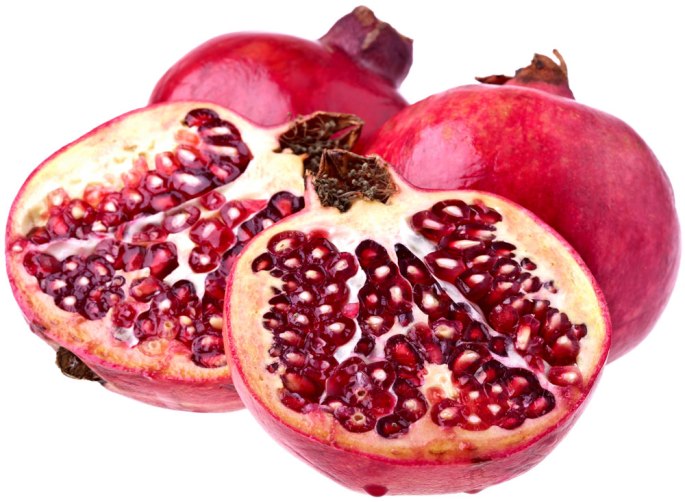
Why pomegranates?

Pomegranates through the humanities.

Living plants bring life to us but pomegranates speak to us through ancient history, religion, politics, the arts and design. And, they have provided a clean energy-saving design idea for a team of lateral thinking scientists.

In Pomegranates: A Timeline History, we have story after story, covering their beginning, through ancient civilizations to their role as symbols in religions that still have a powerful influence on the lives of people across the globe. Explore this at your leisure through Pomegranates: A Timeline History and Food Faith. In politics, see why they were chosen as his heraldic badge by Henry IV of France. [A message for those in power today?] Carl Linnaeus names them Punica Granatum. [Find the connection with Punic Wars] See where they come in the French Republican calendar in 1793.                A

Pomegranates in science.

Check their nutritional value. Then there is this article in Cosmos 56 April-May 2014.

In Australia, despite continued pressure from fossil fuel interests, those who care about the quality of the future in this time of global warming are focusing on battery storage to ensure clean energy supply.

Pomegranates inspire new battery design’.

It is their structure and the seeds this time. The seeds alone were significant in the ancient Greek myth of the creation of the seasons. Philip Dooley writes: “A structural breakthrough could pave the way for a shift from carbon to silicon that would multiply energy storage 10 times.”   This article appeared in Cosmos 56 – Apr-May 2014 under the headline “Pomegranates inspire new battery design” Explore #Pomegranates #electricity storage #battery #lithium

Phil Dooley is an Australian freelance writer, presenter, musician and video-maker. He has a PhD in laser physics, has been a science communicator for the world’s largest fusion experiment JET and has performed in science shows and festivals from Adelaide to Glasgow.

It’s amazing what you can do with a pomegranate. Humans have used the fruit for thousands of years as a tonic for the heart, a cure for diarrhoea and a female contraceptive. And now, in research published in Nature Nanotechnology this February, for electricity storage.”

This time, it is not the fruit itself being used but its structure. It has inspired an ingenious new design for lithium batteries that could increase their capacity many times over.” Read the whole article with pictures of pomegranate and the ‘nano-seeds’ – #Pomegranates #electricity storage #battery #lithium

*************

Thank you Martin Rees

Thank your Martin Rees. In On the Future: Prospects for Humanity, published by Princeton University, Princeton and Oxford, 2018, you take us, the general reader, so clearly to the far future. As Astronomer Royal, that is to be expected. In Chapter 5, ‘Conclusions’, however, you bring us back to the here and now with ‘Science in Society.’ We need, you say, to make wise choices about major challenges to society. In a democracy, that means we require knowledge about issues that matter: they include food, health, energy, robotics and space. To make these wise choices citizens, voters, need an understanding of each other across the sciences and humanities. That applies to so many of us previously denied those connections. The use of the word ‘feel’ is of major importance. It is the felt connection that helps us to make the wiser decision. Martin Rees says we need ‘enough feel for the key ideas of science.’ [p. 213]. Critics say that his short accessible book helps us face with hope major situations that could be catastrophic. Given what he calls our ‘collective intelligence’ voters, from across diverse areas of study, can vote for the choices that will help us deal wisely with these issues. Living in the Southern Hemisphere, I thank Martin Rees. We made a mistake in Australia’s national curriculum.  Since 2015, we have been basing pre-tertiary schooling on separate sets of acronyms. There is HASS – Humanities, Arts, Social, Sciences, separated from STEM – Science, Technology, Engineering and Mathematics. As a teacher who values interdisciplinary engagement, I thank all secondary schools where teachers refuse to be confined by this divide.  I thank all who encourage students to recognise connections. Preference for STEAM, bringing the Arts into the story, creates opportunities to develop this ‘collective intelligence’. With it voters can choose a wiser pathway.