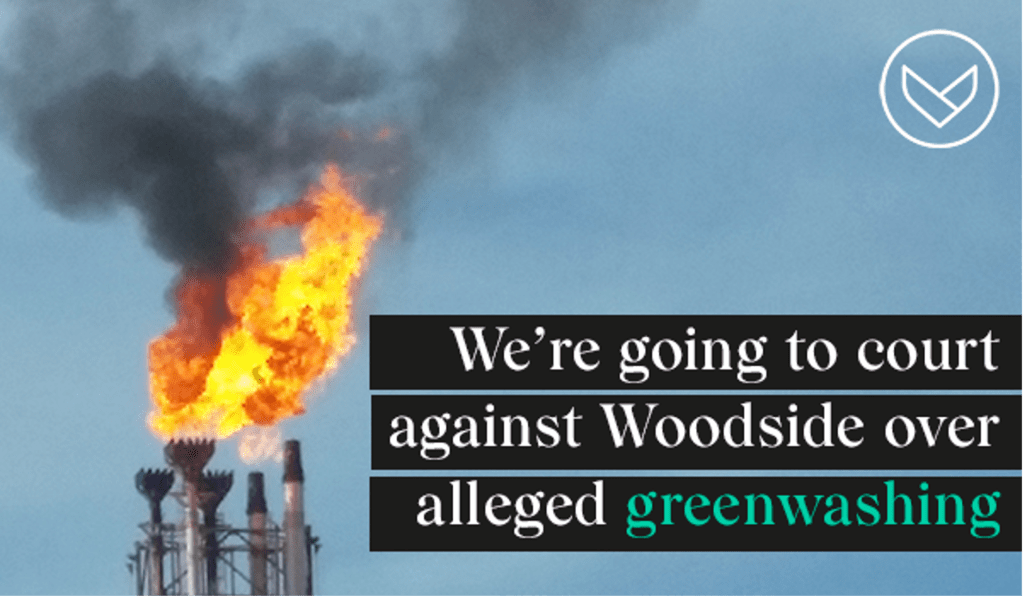
Australia’s fires of 2019/2020 rivalled a volcanic eruption. See their global atmospheric impact.

The ABC RN Science Show with Robyn Williams as presenter takes us to the National Science Center for Atmospheric Research in USA. Saturday, March 16th 2024.
Hear the ABC RN Science Show for its report from Colorado. Listen to ABC App. –

54 minutes.

The Professor, to whom he is speaking, points out the fact that more and more disciplines are seeing connections with the work they are doing. Another example of the continuing insanity of the separation of STEM from HASS in the national Australian curriculum content required by ACARA. Now approving an integrated approach in primary years that end at Grade 6!

US National Science Center for Atmospheric Research is located on a mesa, a flat-topped mountain overlooking Boulder Colorado and is a major centre for the study of the Earth’s climate. Join Robyn Williams to meet scientists and find out about their work.

‘How are our predictions going? Are the climate models getting it right? Do we really know what awaits us? John Fasulo describes the impact of the massive Australian bushfires of 2019 and 2020. He says the smoke and particles injected into the atmosphere rivalled a volcanic eruption driving weather patterns worldwide bringing drought to the US and increased rain to Australia. He says major fires will need to be part of our climate models.

As air temperatures rise, the air’s ability to hold water vapour increases and we are seeing the results with some areas experiencing unprecedented heavy rain, and stronger winds. Will our infrastructure cope?

After the fires the increased rain in Australia had an impact on sea level with a 1cm average fall noted worldwide. Where did the water go? Australia is a unique continent with many rivers draining to the interior, the excess water collecting in vast lakes such as Lake Eyre. This combined with huge desert aquifers act as a temporary storage of freshwater.

Australia, the driest continent in the world outside the poles, needs to be careful. Some of our aquifers are under threat. For example, some want to dam the rivers of the Channel Country in northern Queensland. The LNG fossil fuel is being fracked in the Beetaloo Basin in the Northern Territory despite the opposition of the traditional owners of the land. Then there is the mad idea of the NT Labor government to use the Roper River to irrigate vast new cotton plantations carved out of tropical land and to lower the aquifer, connected to the Roper River, needed by the the traditional owners for the inevitable dry season. Both the Labor and Liberal Coalition Party of the NT have no interest in the warnings and needs of the traditional owners who are fighting to protect the ‘Territory Rivers’. They are trying to get the Federal Minister for Environment and Water to use the national legislation to protect this important water system from this political, short-term revenue-hunting sell-off/ or lease of traditional home lands and their water supply to developers. Cotton plantations in the upper reaches of the Murray Darling river system have done incalculable damage over time. Developers/ corporations so often don’t care about long term consequences. Too often that is the case with democratic governments when voters seem to show little or no interest about the future they are setting up for young people.

And we learn, from the interview with Robyn Williams, if we were not aware of it already and the costs.

‘And at the poles, change has been incredibly rapid. In the Arctic, sea ice is changing. Permafrost is thawing releasing methane. Air temperatures are rising, the seas are warming, the waves are bigger and storms are more intense. The future is ominous for penguins and polar bears whose habitat for hunting, sea ice, is likely to disappear in summer within a few decades.’

AND

For the countries of the Pacific rim
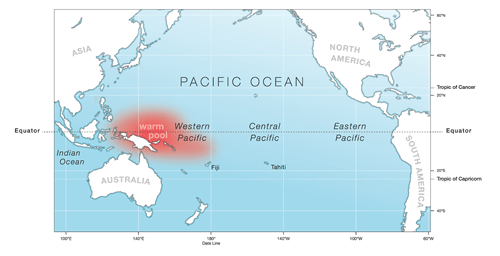
El Niño and La Niña events are a natural part of the global climate system. They occur when the Pacific Ocean and the atmosphere above it change from their neutral (‘normal’) state for several seasons. El Niño events are associated with a warming of the central and eastern tropical Pacific, while La Niña events are the reverse, with a sustained cooling of these same areas.

But so much, thanks to global warming and the slow rate with which so many corporations and governments are acting to face it, the change is so often no longer neutral (‘normal’).

Sea sponges in the Carribean

FromABC Science – Australia.

 What can this sea sponge in the Caribbean tell us about global warming and how it connects with Mt Tambora so very far away?
So many pictures of this sea sponge in the article.
Log In
Hi there!
Newsletterer and science reporter Belinda Smith with your weekly dose of science news from the ABC.
 ‘Just yesterday, my environment reporter colleague Peter de Kruijff reported on a study of sea sponge skeletons that suggest, at least in the Caribbean, Earth has already blown past the Paris Agreement’s target of preferably keeping global warming to 1.5C.
 There are a couple of aspects to unpack here.
 First up: sea sponges have a skeleton. To be honest, I don’t think about sea sponges much, but I’ve generally assumed they’re all a bit like the sponge in my kitchen sink — soft and squishy, maybe with a yellowish tinge.
 But no, some grow a hard, calcified skeleton, onto which they add layers each year.
 Locked in the layers are elements from the seawater around them, which vary in concentration depending on the ocean’s temperature. So as the sponges grow, faithfully adding layers to their skeleton, they also build an archive of temperature over the years — even centuries.
 Sea sponge “records” going back around 300 years suggest Earth is already 1.7C warmer than the pre-industrial era.
 But — there’s always a but — some climate scientists warn we should be careful in assuming temperature records from one part of the Atlantic reflect the global average.’ 

Comment – ABC Science does its best to educate the nation about the evidence regarding global warming and so many other aspects of the sciences and their connections with all of us,
Did you know, however, that in Australia there are politicians that call those aware of climate change a ‘cult’? And one who speaks of ‘climate change’ as ‘cultish’. Remember, calling it ‘climate change’ instead of the more concerning direct description of global warming was a tactic in the late 1990s by ‘The Carbon Club’ to reduce awareness and action. In USA today, since 2020, the Federal executive is taking action. Australia put in place a national climate change policy in 2023, only after we voted out the market-driven climate denying Coalition that had been in power since 2013.
And with the earth, the atmosphere, the oceans warming why go into deep sea mining?

Deep sea mining.

An email from Avaaz. This time – it is Norway!  Has the Norwegian parliament voted on it? I should have posted this Avaaz e-mail earlier. But exploitive legislation can be repealed even if it is not easy. Just as protective environmental legislation can be repealed and was, in Australia, when a Coalition government decreased the marine sanctuaries and there was a big fight to protect the Great Australian Bight from drilling.

‘This is our best chance to stop deep-sea mining before it starts! Tell your friends and family via Whatsapp and Facebook now, then forward the original email from Avaaz!   FACEBOOK   WHATSAPP Sign Now!

‘The twisted next generation of mining companies wants to send machines the size of buildings to rip up the seabed in search of minerals to sell – decimating all life wherever they go. And Norway’s Prime Minister Jonas Støre is urging his Parliament to be the first to authorize this insanity. There’s still hope: the vote is in four weeks and a massive global outcry could tip the balance and save our oceans!
Join now and we’ll deliver our voices directly to the Norwegian Parliament. Was this post [too late? What has been the decision, if it has been voted on?

‘Our forests are dead or dying. Our rivers are poisoned. Where there used to be mountains we’re left with corroded pits – scars in the Earth.’ And with aquifers made toxic by fracking.

‘This is what mining has done to our land. What would happen if we unleashed this horror on our oceans?’

‘A key committee in Norway just took a huge step towards allowing this insanity, and we have just a few weeks to convince the full Parliament that some doors should never be opened.’

‘Coastal countries like France, Canada, and the UK are against dangerous and untested deep-sea mining. But it only takes one to be the first, and Norway’s Prime Minister Jonas Gahr Støre is defying mounting international pressure and calling on MPs to allow deep-sea mining.’

”The good news is that the world is starting to take notice – our sources in Norway tell us that PM Støre’s international reputation is taking a hit and that lawmakers are under intense pressure.

The key vote was just four weeks away! Norway isn’t often the target of global people power, so a massive outpouring of international outrage could tip the balance and save our oceans!’ ‘

Norway: say NO to deep-sea mining! Experts say the seafloor at mining sites will be wiped clean of life. Whole ecosystems will disappear, with consequences we can’t even calculate. We need a “NO” vote in Norway, but this is about so much more. The world is deciding whether to start destroying the ocean floor like we have our mountains, rivers, and forests on land. And our sea kelp – our sea grasses and so much else as they tear through from the surface to reach the sea beds.

‘Imagine if we’d had the chance to stop chasing fossil fuels before we mined, fracked, drilled, and dredged our planet to the brink of catastrophe. We are there right now with our oceans.’

‘Powerful countries are already calling to ban or at least pause these mining activities — to win time to regulate the deep sea properly. And even private companies are rallying behind.”

Norwegian MPs [were] voting on deep-sea mining in four weeks. What happened? ‘Together we can stand with countries that are committed to protecting our oceans, and against politicians like Støre. Sign and share now, and we’ll rally the real ocean defenders! Norway: say NO to deep-sea mining Avaazers love the oceans and all ocean life – together, we’ve helped establish some of the largest marine reserves in history. When the blue whale was close to extinction, we brought millions together, and we convinced Europe to close its ports to whalers. Today our movement can join others to protect our oceans and their incredible animals from yet another threat: the irreversible destruction of their habitat on a multi-generational timescale.’

With hope and determination,
Nate, Antonia, Mel, Huiting, John, and the whole Avaaz team

More Information: Norway parliament deal marks major step towards seabed mining (Reuters) Deep-sea mining may disrupt whale communication, study finds (Reuters) Whale warning as clock ticks towards deep sea mining (Greenpeace) UK backs suspension of deep-sea mining in environmental U-turn (Guardian) WWF condemns Norway’s deep seabed mining plans as “one of the worst environmental decisions Norway has ever made” (WWF)’

In Australia, in 2023, the Petroleum Regulator gave no reasons why it allowed seismic drilling off the Pilbara coastline by Woodside in an area that will have a destructive effect on some of the oldest rock art in the world of the living culture of this continent’s First Nations. [See the ‘Ningaloo’ documentary by our public, citizen-owned ABC.]

And the important marine sanctuaries are under threat all the time from big business, on land and on the oceans. So often they are either producing fossil fuels or funding these corporations, now into deep sea mining. And they are subsidised from our revenue by governments, so often democratic governments – like Australia – that support them. How many of those fossil fuel corporations were lobbying at the UN Conference at Dubai?

And Australia wants to co-host the next UN Climate Change Conference with the Nations of the South Pacific.

Not one of these corporations is interested in the ultimate cost for the children of the world.

‘Greenwashing’ We should be thankful for this research taking us to the truth.

Guy Pearse is a Research Fellow at the University of Queensland’s Global Climate Institute. Greenwash – Big Brands and Carbon Scams – was published by Black Inc, Victoria, 2012. His contents range widely. Just a glimpse at the index can take you to PwC, [pp 191 -192] to the KPMG Global Energy Institute. Go to p. 62 for the businesses funding Earth Hour!

David Suzuki says Guy Pearse’s welcome book reveals

the difficulty of judging the benefits and real environmental costs of the way we live.’

But knowledge is power. We can make our decisions regarding the future for the world’s children on the basis of well-researched, verifiable information and we can ask questions about where our superannuation is going. Be sceptical about their ‘green’ climate advertising.

Guy Pearse begins with Banks. He begins with HSBC

HSBC Holdings plc (Chinese: 滙豐), originally The Hongkong and Shanghai Banking Corporation, and known locally as HongkongBank in Hong Kong, Canada and Australia during the 1980s-90s, is a British universal bank and financial services group headquartered in London, England, with business links to East Asia and a multinational footprint. It is the largest Europe-based bank by total assets, ahead of BNP Paribas, with US$2.953 trillion as of December 2021.[6] In 2021, HSBC had $10.8 trillion in assets under custody (AUC) and $4.9 trillion in assets under administration (AUA).[4]

This is what Guy Pearse found out in 2012. [See Chapter 1 ‘Banks’ pp 5 – 54 ]

HSBC said it was ‘carbon neutral’ and had a Carbon Finance Strategy ‘to promote clean technologies and non-fossil-fuel energy solutions.’ It was putting $100 million over 4 years into 5 global programs. What’s that? Only $20 million over 4 years for one of them. That meant $5 million a year. Just look at its assets and ask where is it really investing?

In 2008 HSBC promoted a Green credit card in Hong Kong and with every use a small donation would go to environmental projects in Hong Kong. [p.6]

However, HSBC lends billions to large corporations. One is Rio Tinto that exploded the sacred site of the Juukan Gorge. HSBC has a 20% stake in Rio Tinto Ltd. Just take in this example. ‘In 2011, when HSBC was hosting the ‘Business Summit on Climate Leadership’, Rio Tinto was using HSBC money to buy new coal projects in Mozambique.’ [p. 7] Rio Tinto was also after coal sites in Mongolia and Namibia as well as its sites in Australia.

HSBC has financial stakes in Woodside – 17%. And Woodside’s Scarborough Project is a danger to pristine waters and marine life. ‘Scarborough will produce levels of pollution which are equivalent to 15 coal-fired power stations concentrated in one of the most culturally and environmentally important areas of WA’. From ‘Say No’ to Scarborough.

Checking in 2023, I found no mention of the environment or clean energy or climate change in what HSBC calls its ‘Community’ and ‘Diversity and Inclusion’ roles in Australia.

What did I find in the public domain?

In 2018 HSBC formed a partnership with iCapital Network focused on ‘alternative investments’. They cover private equity, real estate, vintage wine and art.

In 2023 HSBC is interested in ‘the programmability of digital currencies’.

Along with being able to represent monetary value and ownership, programmability of digital currencies could unlock new types of transactions. Of course, concerns exist around the potential misuse of programmability and the possibility it could reduce financial flexibility and privacy.’

Where is HSBC’s commitment to business leadership about climate change in all of this?

Please buy Green wash. This was a Christmas present to me for 2023.

Maybe find one second hand, or on-line, or borrow Guy Pearse’s book from a public library.

Fossil fuel and ‘greenwashing’ and how dangerous it is.

At COP28 – No wonder the Pacific Island states are frustrated. They are at the frontline of climate change.
DUBAI, United Arab Emirates — Representatives of Pacific Island states expressed frustration and disappointment at the final outcome of the COP28 climate summit in the United Arab Emirates, saying they were left out of the plenary room when the concluding deal was decided.
Amnesty International said “For COP to allow in thousands of representatives-2456 at least – of the fossil fuel industry, which is making vast profits for a wealthy few while trashing the climate for everyone, perverts the very rationale of a meeting whose purpose is to protect the climate and people from further harm’.
In Australia – we have our Fossil fuel corporations pouring money into advertising saying that they are ‘part of the solution’. One of them is Woodside.
Letter from the Environmental Defenders Office.
Dear Erica
Last night our client, Greenpeace, launched a major “greenwashing” case in the Federal Court against Australia’s biggest energy company, Woodside.  Greenpeace alleges that the fossil fuel giant has been misleading and deceiving Australians about the enormous climate harm of its gas and oil projects. 
Woodside claims that it cut down on emissions produced from extracting and processing its gas and oil by 11 per cent in 2022. In reality, it relied heavily on carbon offsets and its actual emissions went up by more than 3 per cent.  
Woodside also publicly claims to have a plan to achieve net zero by 2050.   Yet it fails to mention its target doesn’t apply to Scope 3 emissions which make up over 90 per cent of Woodside’s carbon pollution. 
Not only that, but instead of cutting down on its pollution, Woodside is actively ramping up its fossil fuel production with new gas projects like the Burrup Hub in Western Australia – the most polluting fossil fuel project currently proposed in Australia.  [The Scarborough Project is in some of the important pristine areas. Australia’s ‘petroleum regulator’, without giving reasons will let them begin seismic drilling testing this month!]
Net zero is entirely incompatible with continued investment in fossil fuels, and our client says Woodside must be held to account for these allegedly deceptive and misleading claims. 
“Woodside is treating the Australian public and its shareholders like mugs,” says Greenpeace Australia Pacific CEO David Ritter.  “We’re now asking the Federal Court to rule that Woodside’s claims are misleading. These should be corrected, and the fossil fuel giant should be prevented from making these claims.” 
Greenwashing is on the rise, undermining our efforts to tackle the climate crisis at a time when it matters most.  
That’s why EDO’s Safe Climate team run groundbreaking litigation on behalf of clients to hold Australia’s biggest polluters to account for their environmental impact. 
In 2021, EDO launched legal action against Santos over its claims that fossil gas is a “clean fuel” and that it has a “clear and credible” pathway to reach net zero by 2040 while expanding fossil fuel production.  It was the first greenwashing case in Australia against a major gas industry player, and the first in the world to challenge the truthfulness of a company’s net zero emissions target.  [ It appears also possible that Woodside and Santos are planning to merge!]  
Net zero and clean energy claims by the fossil fuel industry are the new form of climate denial.    As climate action becomes more urgent, major polluters like Woodside and Santos are seeking to convince the public that they have plans to cut carbon pollution while pushing for a massive expansion of fossil fuels across Australia and internationally.   
Greenwashing isn’t just a harmless branding tactic.   It keeps money flowing into harmful coal and gas projects and threatens any hope we have of cutting pollution in time to avoid climate catastrophe.   
Our window of opportunity to interrogate the claims of fossil fuel companies, stop corporate greenwashing and transition out of these industries is closing fast.    That’s why we’re taking legal action.  
Our client’s case against Woodside could require fossil fuel companies to be up front about the climate consequences of their business plans.  Thank you for helping to use the law to tackle greenwashing and hold corporate polluters like Woodside to account on climate.  Kirsty Ruddock  Managing Lawyer, Environmental Defenders Office.

I wonder how ‘greenwashing’ is working on the other side of the equator.

Sunflowers linked to reducing Varroa

Simon Mulvany

Melbourne, Australia, November 14th 2023.

A study published in December in the Journal of Economic Entomology provides early evidence that the humble sunflower (Helianthus annuus) may provide some relief from those fat body-destroying varroa mites.

Evan Palmer-Young, Ph.D.
The pollen and nectar of sunflowers from an overall health perspective may help reduce parasites.

In one experiment the scientists provided supplemental pollen (sunflower pollen, wildflower pollen, or artificial protein patties) to field colonies of honey bees in late summer when Varroa levels often begin to rise. The colonies given supplemental sunflower pollen saw a 2.75-fold diminishment in Varroa infestation levels relative to bees receiving artificial pollen patties. 

Perhaps the most significant finding was from the experiment that looked at the association of Varroa mite infestation levels and sunflower crop acreage. The scientists found that honey bees located near sunflower cropland had lower mite levels—even when the total land cover by sunflowers was scant (a median of 0.32 percent). Their models predicted that each doubling of sunflower acreage within two miles of an apiary would lead to a 28 percent decrease in mite infestation.

Buy sunflower seeds at this site in Australia. Where can they be bought elsewhere? 

Sunflowers traditionally signify 

Happiness – with their vibrant yellow and orange tones, you can’t help but smile when you see a sunflower. What’s more, the colour yellow is symbol of happiness, joy and positivity.

Admiration – sunflowers have cultural significance around the world spanning from the time of the ancient Greeks to present.

In Chinese culture, sunflowers symbolise good luck and lasting happiness which is why they are often given at graduations and at the start of a new business.

Optimism – aside from their rich golden hues, sunflowers turn to face towards the sun, they always look on the bright side!


Loyalty and devotion – Sunflowers have long been considered symbols of faith and devotion, and hailed across civilizations from the Incas to the ancient Greeks.

Strength and resilience – a sunflower’s ability to inspire optimism fortifies the mind and promotes inner strength. 

At the same time think of Ukraine and the devastation of the invasion by Putin’s Russia. Buy sunflower seeds.

Thank you   

Simon Mulvany.

The Environmental Defenders Office [EDO ltd.] Australia.

Fighting the fossil fuel giants. Good news.

Environmental Defenders Office

September 28, 2023

‘Woodside’s seismic blasting approval thrown out after legal challenge by Traditional Custodian.

The Federal Court has invalidated Woodside Energy’s approval to conduct seismic blasting for its Scarborough Gas Project after a legal challenge by a Traditional Custodian. 

Mardudhunera woman Raelene Cooper filed a judicial review in August, arguing the offshore regulator NOPSEMA made a legal error in approving the blasting and that Woodside had not met a condition of the approval that she be properly consulted. 

The project, part of Woodside’s mega-polluting Burrup Hub, is offshore of the Burrup Peninsula in north-west Western Australia, known as Murujuga, which is currently nominated for UNESCO World Heritage listing, as it contains the largest collection of Aboriginal rock art in the world. 

Ms Cooper is deeply concerned about the seismic activity’s impact on her Songlines, including on whales and turtles, which are of high cultural importance. . . .

On September 14th Justice Colvin granted an urgent interlocutory injunction preventing Woodside from commencing blasting until the 28th of September, after Woodside gave 48 hours’ notice it was going ahead despite the unresolved legal challenge. 

Represented by the Environmental Defenders Office, Ms Cooper returned to the Federal Court in Perth on Tuesday for an expedited hearing on the first ground of her case – that NOPSEMA had made a legal error in accepting Woodside’s plan when it was not satisfied it had met stakeholder consultation requirements – as well as an issue of legal standing around the second ground of the judicial review. 

Today, Justice Colvin decided that NOPSEMA’s decision to approve the plan was invalid and should be set aside.  

This means Woodside no longer has an approval to conduct the seismic blasting. 

Following today’s decision, Raelene Cooper said: 

“No one is more relevant to consult about the threat posed by Woodside’s Burrup Hub than Traditional Custodians of Murujuga with cultural, spiritual and family connections to our sacred ngurra. We know what it takes to protect our Country and keep it safe for all of us – plants, animals and humans. When you’re messing with mother Earth you’re talking about all humanity, our very existence.” 

File:Close up of dermochelys coriacea leatherback turtle.

EDO Managing Lawyer Brendan Dobbie said: 

“This is a fantastic outcome for our client, and the whole community, that has affirmed the need for proper consultation to take place before approvals are granted in offshore developments. 

“NOPSEMA should never have accepted Woodside Energy’s Environment Plan, knowing these requirements had not yet been met. 

“The court previously heard about the serious harm that seismic testing would inflict on Ms Cooper’s Songlines and culture.  This is a significant burden for a Traditional Custodian who has a duty to protect these Songlines for future generations. 

“Ms Cooper is entitled to be heard and have her interests represented before any decision on the seismic blasting is taken.” 

BACKGROUND 

The project 

Woodside wants to conduct seismic blasting for its Scarborough Gas Project – a for-export LNG proposal off Murujuga/the Burrup Peninsula in Western Australia, which will result in the release of an estimated 878.02 million tonnes of carbon dioxide over its lifetime. 

The proposed Scarborough Gas Project is part of the Burrup Hub, involving the development of the new Scarborough and Browse Basin gas fields – which alone have an estimated combined emission of 2.95 billion tonnes of CO2.1 The Burrup Hub also includes the Pluto Project processing plant and other linked liquified natural gas (LNG) and fertiliser plants on the Burrup Peninsula. 

This area of north-west Pilbara is a deeply sacred place that contains the largest and most dense collection of Aboriginal rock art in the world, totalling more than one million images.  This priceless cultural treasure is currently nominated for UNESCO world heritage listing 2, but researchers believe the sacred Songlines and stories contained in these carvings are being damaged by emissions from the Burrup Hub.3 

Seismic testing 

Seismic testing involves blasting compressed air from a specially adapted ship. The noise from the blasts causes sound waves to bounce off the seabed back to sensors carried by the ship. It’s done to map fossil fuel reserves as a precursor to drilling. 

The impact of seismic blasting on marine animals such as whales can include damage to the sensors that they use to hear, ability to communicate through their electro-frequencies, stress, displacement from habitat, physical injuries and death. 

NOPSEMA approvals 

In September 2022, EDO client Dennis Tipakalippa successfully challenged approvals granted by NOPSEMA to gas company Santos for drilling its Barossa Gas Project, north of the Tiwi Islands. During the hearing Mr Tipakalippa and other Tiwi Traditional Owners demonstrated their deep cultural connection to the Sea Country, including through On-Country evidence. 

The court agreed with Mr Tipakalippa and the Munupi clan that they had not been properly consulted on the project as stakeholders, as required by law, and overturned the approval. The decision was upheld on appeal by the Full bench of the Federal Court in November. 

  1. https://d3n8a8pro7vhmx.cloudfront.net/ccwa/pages/13865/attachments/original/1632735886/CCWA_Clean-State_Burrup-Hub_Report_WEB-READER.pdf 
  2. https://www.dbca.wa.gov.au/management/world-heritage-areas/murujuga-world-heritage-nomination 

Environmental laws for today, not tomorrow

Which nations are passing laws caring about the future we are leaving to the children?

Two ‘gas giants’ –  Jupiter in our solar system

And this ‘gas’ giant – Scarborough Project

Off the NW coast of Western Australia.

Who cares about the oceans?

No current worthwhile legislation here.

The Science Show

with Robyn Williams

The Australian Broadcasting Corporation – national and publicly owned since 1932, celebrating 90 years of wonderful service to Australia.

Play

Space to play or pause, M to mute, left and right arrows to seek, up and down arrows for volume.

Listen

7m 43s

Image:

Frances Flanagan presents the Hancock Lecture at the State Library of NSW 31st May 2022. (Joseph Mayers)

Download Environmental laws for today, not tomorrow (10.60 MB)

Download 10.60 MB

In her Hancock Lecture for the Australian Academy of the Humanities, Frances Flanagan argues our environmental laws, in particular those comprising The Environmental Protection and Biodiversity Conservation Act (EPBC Act) are written with a view too narrow. This was illustrated in 2021 when a class action by children and others seeking a duty of care owed to them by the Minister for the Environment when making approvals under the EPBC Act was lost.

Woodside’s Jupiter – now Scarborough – project off the west Australian coast was originally called Jupiter for a reason. Like the planet, it is a gas giant. A methane gas giant. Gas will be extracted until 2059, releasing carbon dioxide as it is burnt, adding to the quiet catastrophe. Frances Flanagan says current laws don’t consider the dwellings of millions of people which will be inundated as sea levels rise on a warming Earth. She presents a compelling case for present laws to be widened to protect future generations.

We have just seen the impact of flooding in Bangla Desh and southern India and felt its effect on the people of the Northern Rivers of Southern Queensland and New South Wales.

Australian Academy of the Humanities – Hancock Lectures

Speaker
Frances Flanagan
Lecturer in Work and Organisational Studies
The University of Sydney

Presenter
Robyn Williams

Producer
David Fisher

Duration: 7min 43sec

Broadcast: Sat 18 Jun 2022, 12:04pm

And on our public ABC Channel 2, on Tuesday June 21st 2022 we saw  Southern Ocean Alive! The world beneath the waves. Such a vital world with so much life.

And dying – the sea kelp forests off the east coast of Tasmania

but

hope

Possibly a red kelp that can survive the warming of the East Coast current of Australia is being tested in laboratories. Maybe the life-giving properties of kelp can be brought back but there will need to be environmental protection to help the process.

Miners of oil and LNG on our lands and in our oceans care nothing about the nation’s or the planet’s bio-diversity.

These exploiters of fossil fuels do not want to see legislation in place for tomorrow.

Sea Kelp – and its virtues

Time to go ‘Down Under’ – We learn more about kelp forests in the northern hemisphere. Can we protect this vital contribution to our bio-diversity?

Who’s heard of the Great Southern Reef?

‘Although we tend to associate the word ‘reef’ with tropical coral reefs, those found in temperate areas—regions with intermediate climate conditions that are not tropical or polar—are also significant and important.

The Great Southern Reef is a massive series of reefs that extend around Australia’s southern coastline, covering around 71,000 square kilometres from New South Wales around the southern coastline of Australia to Kalbarri in Western Australia. The reef’s main feature is its extensive kelp seaweed forests—perhaps not as colourful as tropical corals, but beauty is in the eye of the beholder: these kelp forests are some of the most productive ecosystems on the planet. They support sponges, crustaceans, fish, bryozoans (small colonial animals that form exoskeletons of chitin or calcium carbonate), echinoderms (such as starfish and sea urchins) and many types of mollusc (snails and shellfish). Many species living on the Great Southern Reef—like the weedy seadragon (Phyllopteryx taeniolatus)—are not found anywhere else in the world.

Unusually hard to spot for mid-sized fish (~ 30 cm), these actually stand much less out without a strobe underwater. Like my pictures? There are more in "Sex, Drugs and Scuba Diving" and on my blog.

Image adapted from: Klaus Stiefel CC BY-NC 2.0

It’s estimated that the Great Southern Reef contributes more than $10 billion a year to the Australian economy. The major fisheries in the reef are the rock lobster (worth around $375 million/year) and abalone (worth around $134 million/year). Tourism is also important—it’s estimated that the reef directly supports activities worth nearly $10 billion/year, while the total tourism from the reef and adjacent coastal areas amounts to around $40 billion/year.

So this reef is clearly important. But parts of it look like they’re in trouble.

A recent study found widespread loss of kelp forests following a marine heatwave in 2011. Surveys of 65 reefs along the Western Austral coast found that the area covered by kelp forests declined by 43 per cent by 2013, with the range of the forests’ cover decreasing by around 100 kilometres, and their area shrinking by around 370 square kilometres. Even by late 2015, nearly five years after the heatwave, there were no indications that the kelp forests were recovering.

The Great Southern Reef extends along the southern coastline of Australia.

The researchers documented a shift from kelp to turf-forming seaweeds and sub-tropical and tropical fish species that thrive in warmer waters. Shifts in the abundance and diversity of species of sea urchins and gastropods were also noted.

Even by late 2015, nearly five years after the heatwave, there were no indications that the kelp forests were recovering.

The Indian Ocean along the coast of Western Australia is a global warming hotspot—it’s high up on the list of places around the world experiencing high rates of ocean warming. This region has seen a temperature increase of 0.65° C over the past 50 years.

Warmer temperatures are shifting southwards at a rate of 20 to 50 kilometres per decade. If this trend continues, we could soon see a complete transformation of this region of the Great Southern Reef—away from temperate kelp forests to more tropical species.

And while everyone loves tropical fish, the widespread loss of the kelp forests of the Great Southern Reef would be devastating to the rich and diverse ecosystems.’ 

This article has been reviewed by the following experts: Mrs Charlie Phelps School of Science, Edith Cowan University, 2018 Max Day Environmental Fellowship Award winner; Dr Thomas Wernberg UWA Oceans Institute & School of Biological Sciences, The University of Western Australia.

Go to USA and the kelp forests off the West Coast from Alaska to California. Visit  Norway. And Tunisia.

What is global warming doing to these sources of the biodiversity we need?

Go to Robyn Williams today – June 4th 2022 – with our ABC RN’s  The Science Show

Seaweeds – thousands of species many with untapped potential

Download Seaweeds – thousands of species many with untapped potential (11.51 MB)

And we certainly do not need drilling for oil or LNG in these areas currently protecting bio-diversity in our oceans.

In Northern Tanzania – for safari parks! And trophy hunters!

When the greed of the powerful destroys the lives of the many and the planet.

‘Indigenous people have protected the Earth’s rivers, forests, and grasslands for thousands of years.

A young Maasai woman – the Tanzanian government’s desire for the trophy hunter dollar means the destruction of her life.

This from the team at Avaaz – See what the Tanzanian government is doing to the Maasai.

Too easily we focus only on our separate lives and forget we are part of the whole.
Take Action Now! Dear friends, The Maasai’s future is going up in flames.

They’ve been hounded by the Tanzanian government for years — hundreds of homes have been burnt to the ground.

Now the government is even more determined to get rid of them, cutting vital medical services, and threatening to evict thousands of families so a foreign company can expand trophy hunting on Maasai land.


They’re asking for our help. 

Millions of us are reading this email. If enough chip in just a small amount, we could supercharge a game-changing court case to defend the Maasai. We’d fund the best lawyers, get massive media coverage, support local resistance, and create a global fund to empower other Indigenous communities threatened around the world.

Our movement helped stop huge Maasai evictions in 2014 — now let’s do it again!

The Maasai are fighting for their survival — let’s give them massive global support as they courageously defend their land and its wildlife against the trophy hunters. 

Donate what you can now:
  I’LL DONATE $3 I’LL DONATE $6 I’LL DONATE $12 I’LL DONATE $23 I’LL DONATE $45 OTHER AMOUNT

Evicting the Maasai could spark a humanitarian disaster, pushing thousands of families into severe poverty while hunting explodes on the very lands they’ve protected for centuries. And over 70% of their land has already been taken! 

But we helped the Maasai fight the last round of mass evictions — and they won. But now the government is back again, employing vicious, life-threatening tactics to force them out.

The Maasai can’t afford to lose. But it’s not just them —

80% of the planet’s remaining biodiversity is safeguarded by Indigenous Peoples and Local Communities. We can’t end the climate and extinction crises without them. But almost everywhere we look, these communities are under attack from loggers, miners, and tourism — and too often, they’re fighting for their survival with almost no resources.

We can help change that. If enough of us chip in, we could: Fund the best lawyers to help the Maasai challenge evictions and land-grabbing in courts; Give media and advocacy support to shine a spotlight on their courageous campaign;  Create an Indigenous protection fund to provide rapid-fire support to Indigenous activists defending their communities; Pay for Indigenous delegations to travel to upcoming global biodiversity and climate summits to make their voices heard, and; Power urgent campaigns to protect Indigenous communities and save life on Earth.   Indigenous people have protected the Earth’s rivers, forests, and grasslands for thousands of years.
Today they’re fighting for their own survival, and even a small donation will make a massive difference in this most unequal battle —

We know we can help the Maasai win. Three years ago, we supported the Waorani people of Ecuador to sue their government — and they won! And then in 2014, we helped the Maasai stop another huge round of evictions. Everything Avaaz does is thanks to millions of people around the world; beautiful things happen when we come together. And right now, for the Maasai in Northern Tanzania, it could mean the world.

In solidarity,

Kaitlin, Marigona, Mike, Adela, Camille, Alis, Sofia, Nell, and the whole team at Avaaz

PS. This might be your first donation to our movement ever. But what a first donation! Did you know that Avaaz relies entirely on small donations from members like you? That’s why we’re fully independent, nimble and effective. Join the over 1 million people who’ve donated to make Avaaz a real force for good in the world.