

The ABC RN Science Show with Robyn Williams as presenter takes us to the National Science Center for Atmospheric Research in USA. Saturday, March 16th 2024.
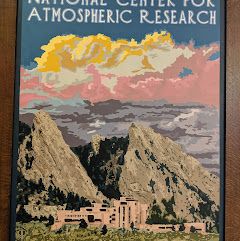
Hear the ABC RN Science Show for its report from Colorado. Listen to ABC App. –
54 minutes.
The Professor, to whom he is speaking, points out the fact that more and more disciplines are seeing connections with the work they are doing. Another example of the continuing insanity of the separation of STEM from HASS in the national Australian curriculum content required by ACARA. Now approving an integrated approach in primary years that end at Grade 6!
US National Science Center for Atmospheric Research is located on a mesa, a flat-topped mountain overlooking Boulder Colorado and is a major centre for the study of the Earth’s climate. Join Robyn Williams to meet scientists and find out about their work.
‘How are our predictions going? Are the climate models getting it right? Do we really know what awaits us? John Fasulo describes the impact of the massive Australian bushfires of 2019 and 2020. He says the smoke and particles injected into the atmosphere rivalled a volcanic eruption driving weather patterns worldwide bringing drought to the US and increased rain to Australia. He says major fires will need to be part of our climate models.
As air temperatures rise, the air’s ability to hold water vapour increases and we are seeing the results with some areas experiencing unprecedented heavy rain, and stronger winds. Will our infrastructure cope?
After the fires the increased rain in Australia had an impact on sea level with a 1cm average fall noted worldwide. Where did the water go? Australia is a unique continent with many rivers draining to the interior, the excess water collecting in vast lakes such as Lake Eyre. This combined with huge desert aquifers act as a temporary storage of freshwater.
Australia, the driest continent in the world outside the poles, needs to be careful. Some of our aquifers are under threat. For example, some want to dam the rivers of the Channel Country in northern Queensland. The LNG fossil fuel is being fracked in the Beetaloo Basin in the Northern Territory despite the opposition of the traditional owners of the land. Then there is the mad idea of the NT Labor government to use the Roper River to irrigate vast new cotton plantations carved out of tropical land and to lower the aquifer, connected to the Roper River, needed by the the traditional owners for the inevitable dry season. Both the Labor and Liberal Coalition Party of the NT have no interest in the warnings and needs of the traditional owners who are fighting to protect the ‘Territory Rivers’. They are trying to get the Federal Minister for Environment and Water to use the national legislation to protect this important water system from this political, short-term revenue-hunting sell-off/ or lease of traditional home lands and their water supply to developers. Cotton plantations in the upper reaches of the Murray Darling river system have done incalculable damage over time. Developers/ corporations so often don’t care about long term consequences. Too often that is the case with democratic governments when voters seem to show little or no interest about the future they are setting up for young people.
And we learn, from the interview with Robyn Williams, if we were not aware of it already and the costs.
‘And at the poles, change has been incredibly rapid. In the Arctic, sea ice is changing. Permafrost is thawing releasing methane. Air temperatures are rising, the seas are warming, the waves are bigger and storms are more intense. The future is ominous for penguins and polar bears whose habitat for hunting, sea ice, is likely to disappear in summer within a few decades.’
AND
For the countries of the Pacific rim
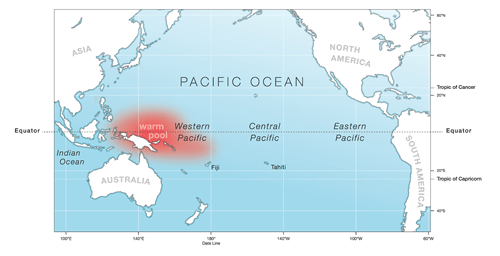
El Niño and La Niña events are a natural part of the global climate system. They occur when the Pacific Ocean and the atmosphere above it change from their neutral (‘normal’) state for several seasons. El Niño events are associated with a warming of the central and eastern tropical Pacific, while La Niña events are the reverse, with a sustained cooling of these same areas.
But so much, thanks to global warming and the slow rate with which so many corporations and governments are acting to face it, the change is so often no longer neutral (‘normal’).









 Sciences and Humanities