Bushfires. Climate. Politics.

A dead koala in a burnt-out forest on Kangaroo Island

Image:

Peter Parks/Gerry Images

Melanoma Country – a poem on bushfires, climate, politics and society

By Jonathan Happold on The Science Show with Robyn Williams Share

Download Melanoma Country – a poem on bushfires, climate, politics and society (3.84 MB) Download 3.84 MB

Jonathan Happold is a veterinarian and epidemiologist based in Canberra. He wrote his poem, Melanoma Country on 2nd January 2020 as south east Australia was on fire. He included the following:

I wrote Melanoma Country in the hours before evacuating from the South Coast of New South Wales, Australia, on 2nd January.

As an Australian – it was simply an expression in response to the bushfires. Shortly after Christmas, I drove to the coast through dry and dusty paddocks, and forests of tall Spotted Gums that had been rendered black and sepia after fires in early December. I walked through tinder-dry patches of unburnt forest to the edge of a national park that was unrecognisable in its bleakness. Earlier, I’d been on the edges of an active fire ground, helping mates on a farm prepare for the threat that loomed on a dark and reddening horizon.

The words of Dorothea Mackellar’s famous poem came to mind – ‘I love a sunburnt country… of droughts and flooding rains’ – and the words didn’t resonate as once they might have done. In the face of climate change, the romance of droughts, floods and a perpetually ‘sunburnt’ country is wearing thin. 

And hence the idea of Melanoma Country – Australia isn’t just sporting a tan anymore: it’s ‘sunburn’ (read: effects of climate change) has become dangerously cancerous.

As a veterinarian – I’m deeply saddened by the loss and suffering of wildlife and livestock, and worried by the impacts of climate change on our farming communities. Images of burnt animals are horrifying and it’s hard to get your head around the scale of destruction of wildlife and their habitats.

Also as a veterinarian and epidemiologist, I work in an area of science that is fundamentally about understanding cause and effect, and critically appraising evidence. So it concerns me greatly that denial of human-induced climate change still appears to have traction in some quarters of politics, the media and society.

As a father of two young kids I am worried about their future. It saddens me that they won’t be able to enjoy many of the places of natural beauty in south-eastern Australia that I enjoyed as a kid. It troubles me that the ‘new normal’ that they inherit may well be – in so many ways – less secure and less nourishing for mind, body and soul. And it angers me to see policy and politics in Australia being so incredibly short-sighted and bereft of a deep sense of what really matters.

And as someone who senses the urgency of the climate situation – it is time to get serious about addressing the mess that we’ve created. The effects of climate change are happening now; it hurts and it’s really costing us. We need to turn this thing around through mitigation, not just adaptation. I don’t want to adapt to summers like this! And we need to do it through personal responsibility and political action. When I wrote the poem, it seemed even more futile than holding a hose to 20m flames. But if every single one of us does something, then perhaps there’s cause for hope. Duration: 2min 47sec Broadcast: Sat 18 Jan 2020, 12:05pm

Credits

plus

Related

  • A dead koala in a burnt-out forest on Kangaroo Island famed as Australia’s “Galapagos” for its unique and abundant wildlife. Now, the charred forest floor is littered with corpses of animals incinerated by the blazes that swept through in early January 2020. Peter Parks/Gerry Images

Full episode 54min 7sec How bees see, how fish change their sex and a poem on bushfires, climate, politics and society

For 2020, connections we need.

In February 2019 I began this blog thanking Nobel Laureate Professor Roald Hoffmann quantum chemist, poet and playwright for all his work. Now, he suggests this book.

The Overstory’ by Richard Powers, published  by Vintage 2019. It won the Pulitzer Prize for Fiction in 2019. Its focus on trees and our connections with them challenges mind and heart. We need it in the face of climate change. We need to be thinking again.

Why is it special for me? He quotes Ralph Waldo Emerson, James Lovelock and Bill Neidjie. An Aboriginal Elder, he is Gagudju Man: Bill Neidjie’ and his book, ‘The environmental and spiritual philosophy of a senior traditional owner, Kakadu National Park, Northern Territory, Australia, published by JB Books, Australia, 2002.

Gagadju Man: Keeping his legacy alive is a film made, with permission, by AIATSIS . “Big Bill Neidjie was the keeper of ancient knowledge and the last speaker of the Gagudju language from northern Kakadu. He was instrumental in the establishment of Kakadu National Park and was deeply committed to sharing his love for his country and his culture,” Professor Dodson said. “He was a truly great Australian and we are honoured that his family has chosen AIATSIS to hold this very special film and help continue his journey – to share his culture with all Australians.” I’m glad to see his approach to life acknowledged by Richard Powers in this book that Tim Winton calls ‘a masterpiece’.

Richard Powers quotes part of his poem about ‘tree’. He ends at this point. ‘Tree and grass same thing’. Big Bill Neidjie goes on. ‘They grow with your body/with your feeling.’

For 2020, I offer trees, despite our devastating bushfires. As well as Richard Powers’ ‘Overstory’, in the ‘The Songs of Trees’ by David George Haskell, visit the olive tree.

Carlo Rovelli – Enhancing our understanding of nature.

We are now moving from Dr Adriana Dutkiewicz’s geological research to the origins of scientific thinking and its connection with democracy in Ancient Greece. [I thank Adriana for the gift she gave me when she introduced me to Carlo Rovelli.]

First of all, go to YouTube. Listen to Carlo Rovelli speaking about Seven Brief Lessons on Physics. This book has been translated into so many languages for its clarity and beauty and sold in millions. It offers us knowledge on which to build our capacity to approach the future. He makes clear to us that ‘nature is our home and we are at home in nature’. Published by Penguin 2016, this translation into English by Simon Carnell and Erica Segre is a delight to read. Take time to pause. Absorb the connections he makes before going on. Take it slowly. Like a good wine it is to be savoured. You will find so much here our curriculum reviewers in Australia had no understanding of in 2015. There should be none of this debate about climate change. Carlo Rovelli makes clear just how and why, for example, the separation of STEM from HASS by Australian reviewers, is ‘pernicious’. Subtle. Insidious. Damaging. Denying thinking. Dangerous.

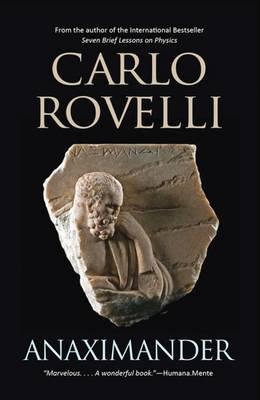
Then come to Anaximander, by Carlo Rovelli, translated by Marion Lignana Rosenberg, Westholme Publishing, English translation 2011. First published in 2009. In its introduction he makes clear how pernicious is this modern separation of the sciences from the humanities. All students of the humanities denied connection with the sciences need to read his work. He is bringing us knowledge in such a way that we learn.

In his introduction, Carlo Rovelli speaks of ‘the pernicious modern separation between the sciences and the humanities.’ And he goes into the past with such depth of knowledge and understanding of humanity to show just how significant have been the attitudes developed before this significant scientific revolution. Note. IT IS MODERN. Thank you C.P. Snow and his ‘two cultures’. Thank the Cold War mentality. He makes clear the immense value now of scientific thinking. For those still subjecting students to that pernicious separation his historical analysis is important. He shows how scientific thinking, always respecting the past but being willing to challenge it, as Kepler respected but questioned Copernicus and as Einstein respected but questioned Newton, helps us to approach the future we all share.

Going into the past for the future

Academics recognised as future research leaders

The University of Sydney will receive more than $1.7m from the Australian Research Council for new research into melting Antarctic ice sheets and how deep-sea carbon reservoirs affect climate change.

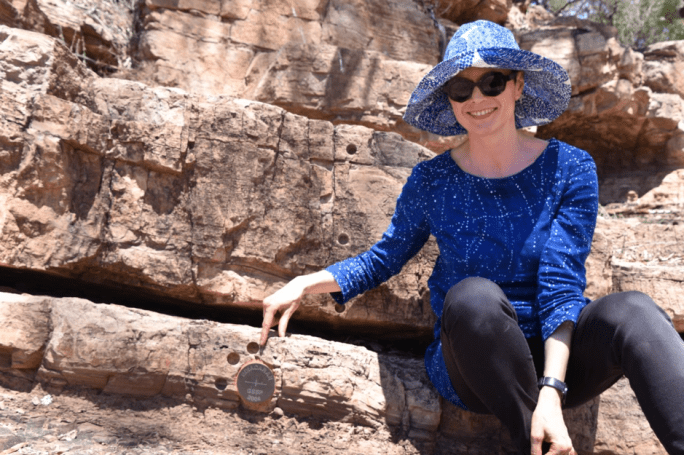
Dr Adriana Dutkiewicz pointing to the ‘golden spike’ in the Flinders Ranges marking the base of the Ediacaran system, a geological period that started 635 million years ago.

Federal Minister for Education Dan Tehan has this week announced the Australian Research Council Future Fellowships, which fund future leaders of Australian research to tackle challenges of national importance.

Geologist Dr Adriana Dutkiewicz from the School of Geosciences in the Faculty of Science, was awarded more than $861,000 to delve into the evolution of deep-sea carbon reservoirs over the past 150 million years. By examining Earth’s geological past, we will be better able to predict the rate and implications of climate change.

“Carbon is constantly cycled between the biosphere, atmosphere, oceans and the solid Earth. This cycle regulates the Earth’s surface temperature and drives its climate, affecting all life and ecosystems on our planet,” Dr Dutkiewicz said.

“The accumulation of deep-sea carbonate sediments on the ocean floor is the main mechanism by which carbon dioxide is removed from the atmosphere and the ocean. This carbon reservoir is the least well-understood component of the long-term carbon cycle,” she said.

“This project will involve working with vast amounts of existing ocean drilling data, collected over many decades, and analysing these global data sets to discover new information. Working with existing data also means that I won’t get sea-sick. I am looking forward to forging international collaborations and working on a global, planetary-scale problem that is important for the future of this planet.”

Oceanographer Dr Paul Spence will conduct a series of ocean and ice experiments in a $871,0000 project to better understand Antarctica’s melting ice sheets, which are responsible for 28 percent of global sea level rise in recent decades, and could contribute a staggering 15 metres by 2500.

Pro Vice-Chancellor (Research) Professor Laurent Rivory congratulated Dr Dutkiewicz and Dr Spence on the successful funding of these important projects.

‘Climate change is one of the most pressing issues of our time and will soon affect every aspect of our lives, from where we can live and how our food is grown, to the jobs we will hold in the future.’

How marine snow cools the planet

Read about Dr Dutkiewicz’s research

World heritage and ‘that wall’.

Why, when science gets it right, do our leaders for political reasons get it wrong?

In democracies we choose our leaders. Our attitudes are revealed by our choices.

World heritage sites are established because there is something amazing, remarkable, irreplaceable that stirs our capacity to wonder. We can study and learn from them. A case in point. In Australia, is the Great Barrier Reef. A coal ship corridor for 50 kilometres is being established from Abbot Point on the Queensland coast. Our reef can be seen from space! Global warming is having its impact but political decisions like this intensify the problem. David Attenborough has made clear how destructive our political actions have been. We need to be custodians of these extraordinary sites. Slowly or swiftly, we take from the world a living wonder.

In America, the following is an example of swift destructive decision making.

This example comes from Mark Sumner of the Daily Kos staff, Sunday, October 6th 2019 – 3:27 AM Australian Central Daylight Time.

Trump is destroying an irreplaceable world treasure in an effort to speed up building his ‘wall’

Portions of Organ Pipe Cactus National Monument were already crossed by a border fence in 2017 – but now they are destroyed. RSS

“Since 1976, Organ Pipe Cactus National Monument has also been the Organ Pipe Cactus Biosphere Reserve, a world heritage site sanctioned by UNESCO as the most pristine examples of intact Sonoran Desert ecosystem. The otherworldly beauty of the monument brings visitors who come to gawk at the towering forms and hike the gravel-strewn trails. It also attracts scientists from around the globe who study the inhabitants of the desert and their adaptation to this incredible environment.

Mark Sumner calls this decision “one of the greatest acts of ecological vandalism in a century—carried out in an effort to hurry construction of the President’s border fence.”

The author makes clear why he thinks the President of the United States has chosen to move into sites of national, and international significance. It appears to be, this way, he can avoid “potential lawsuits from private landowners that could tie up progress for months.” The President, it also appears, is expecting “the EPA and Interior Department to ignore every law and regulation concerning construction, environmental impact studies, and protection of archaeological artifacts.” It is important to realise that some of the areas targeted already had an existing barrier. The Organ Pipe Cactus National Monument had such a barrier set up between 2012 and 2017. Mark Sumner reminds his readers.

“Even after miles of border fence were erected in Organ Pipe Cactus National Monument between 2012 and 2017, the striking beauty of this Sonoran Desert jewel was preserved. There is no question that original fence was destructive. Following the border as closely as possible meant that not only were saguaro and other cactus that had grown over a space of centuries removed to provide highly questionable ‘security,’ but the ranges of rare and endangered desert animals were permanently altered. Disturbing as it was at the time, that initial fence was placed with some care, often without disturbing ancient, towering examples of cactus within just a few feet of the fence. Images from 2017 show a relatively low fence that, while it certainly doesn’t vanish into the landscape, is also not a jarring disruption of the otherwise gorgeous scenery.”

“Now those ranges, and cactus older than the nation, are simply being bulldozed aside as [he] carves a scar across the desert. That original fence was in no sense attractive, and the damage it caused to the site was real. But compared to what [he] is doing in an effort to claim miles for his ‘wall,’ it’s a paper cut.”

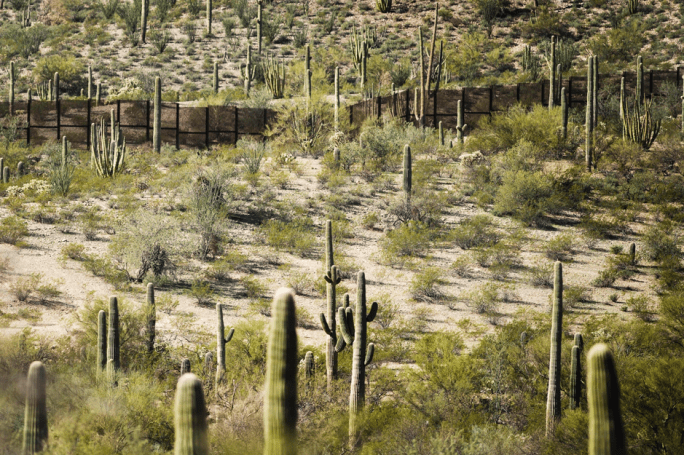
The image shows a section of the border fence as it existed in 2017.

Now, in 2019, this.
Saguaro cactus being bulldozed in advance of building his border ‘wall’.

“In video shot by Kevin Dahl, senior program manager for the National Parks Conservation Association, bulldozers can be seen cutting through the Saguaro and heaping them like rubbish.

These cactus can obtain a weight of tons, and an age of centuries. Even the more modest-sized examples being bulldozed in these images likely have an age of over 100 years, as growth comes slowly in the water-starved desert. 

In September, the defense department claimed that saguaro in the path of the barrier construction would be ‘relocated’ to other sections of the monument. But Dahl’s video reveals that this is a flat-out lie. The rare and iconic cactus are instead shown being pushed along by bulldozer and piled into heaps with other ripped-up plants. 

These areas of desert will not be repaired in the lifetime of anyone now looking at their events. Or their children’s lifetime. Or their children’s. Even if [his] pointless, useless, ugly barrier were ripped down tomorrow, it wouldn’t begin to repair the damage that’s underway — damage that is expected to stretch 78 miles across the ecological fragile park.”

“Sorry, world.”  This is the way Mark Sumner finishes his article.

In Australia, Judith Wright, one of our finest poets, warned us about the dangers to the Reef in the 1970s. Rachel Carson tried to alert America to the terrible impact of thoughtless or deliberate political decisions. Aided by global warming, in Australia, despite the efforts of those who work tirelessly to conserve this world heritage site we are allowing this to go on. Its condition now is considered ‘very poor’. The decision to establish that coal ship corridor was made in 2017.

I thought this example of how swiftly the damage can be done worth sharing. Democracies do not have the excuse of those living under totalitarian regimes. We can find out. But how often is it – when such extraordinary natural and often equally important cultural world heritage sites are not close to us – that we, the citizens of our democratic nations, wake up too late? What is getting in the way? We need to be thinking about that.

Add Writing to the Warwick story.

Robyn Williams and the ABC’s Radio National  Science Show are at the University of Warwick near Coventry for the British Festival of the British Science Association [BSA]. He is exploring the range of scientific work at Warwick Go to these links.


UK’s Warwick University – collaborative projects and filling skills gaps

Robyn takes us to its gene banks, preserving specific vegetable seeds for future diversity. He rides in an automated ‘pod’ able to avoid anything coming ahead. That ‘pod’ takes blind people to the beach at Brighton. There is reference to the collaboration with Monash. There is reference to the Flinders University’s Tonsley site in Adelaide where an automated vehicle is being developed. There is confirmation through a machine seeing inside, beyond the X ray capacity, of the discovery of cultural material of the First Nations in the Northern Territory and the fact that it is 65,000 years old. We learn how babies are encouraged to speak. Wake them to the world around them.

President of the British Science Festival, Professor Alice Roberts, in charge of Public Engagement in Science at the University of Birmingham, considers the future.

Alice Roberts – how to approach humanity’s huge challenges

But add this to your understanding of the work of the University of Warwick.

The University of Warwick has had, for a long time, commitment to writing.

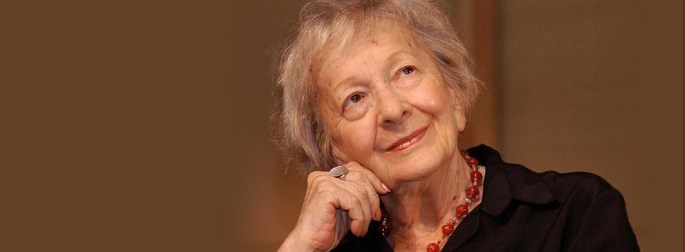
They quote this poet, called the ‘Mozart of Poetry . . but with something of the fury of Beethoven’ by those who awarded her the Nobel Prize for Literature.

See the http://www.szymborska.org.pl/aid-found.html  the Szymborska Foundation.

“Whatever inspiration is, it’s born from

a continuous “I don’t know.”

Wislawa Szymborska

The Warwick Writing  Program was established by Professor David Morley. Elected a Fellow of the Royal Society of Literature, as ‘A National Teaching Fellow, Professor Morley teaches on Warwick’s Writing Programme, and is a recent winner of The Ted Hughes Award for New Work in Poetry for his collection The Invisible Gift, and The Cholmondeley Award for achievement in poetry from The Society of Authors.

‘This Warwick University module is an option solely for Year Two students taking English Literature and Creative Writing. The module offers a practical, imaginative and robust progression to the Year 3 Personal Writing Project in which you work one-to-one with a tutor. It is vital that applicants have read and written poetry and possess experience of writing workshops. Workshops are two hours long. Former students of this module have gone on to establish significant reputations as poets, performers, film-makers, spoken word artists, editors, conceptual artists, and publishers.’ The capacity to connect with sciences needs the humanities.

Where’s the third ‘f’? We have flora and fauna. How about fungi!

Thank you. Australia’s national public broadcaster, through ABC RN’s Science Show, Saturday September 14th 2019 is bringing us the information we need to develop the knowledge we must have to make connections for the future.

A panel of mycologists, experts in the study of fungi, were in Adelaide at WOMADelaide in 2019, in our stunning Botanic Park that has celebrated the best of the World of Music, the Arts and Dance for decades. Here we had the vital connections in STEAM, not the, divisive STEM separated from HASS. With it came recognition of Aboriginal science. See my blog ‘Deadly Science and Dark Emu’*

I listened to Alison Pouliot of the ANU, author of The Allure of Fungi, published by the CSIRO. She posed the question that has become the title of this blog. The panellists are scientists sharing their knowledge with all at WOMADelaide. Here’s its title. You, too, can listen to their informative, engaging story now on  The Science Show.

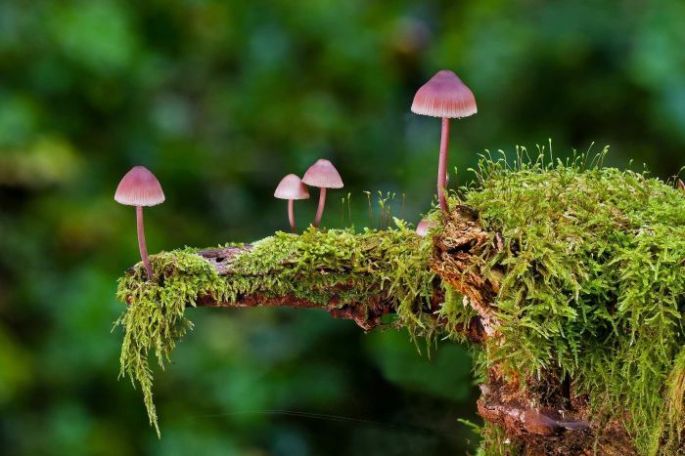
Image: Is it time to look a little more closely at fungi for solutions to some of the world’s problems? (Pixabay: adege) Link to the larger image.

Magic Mushrooms: Can their mycelia give us safer plastic replacements? “Flora, fauna… and fungi! Our expert panellists, from Australia, USA and the UK, made clear at WOMADelaide they believe it is time for more attention to be paid to that third ‘F’, especially given fungi is a kingdom of species just like plants and animals. Fungi’s uses are staggering, from life-saving drugs to new building materials, greener plastics to helping grow new ears or organs.” Many farmers, we heard, are interested. They want to move away from industrialized agriculture.

In Tasmania, mycelia are being connected with architecture. Bio- bricks! Mycelia are the vegetative part of a fungus, consisting of a network of fine white filaments. (hyphae). [The role of fungi in trees is in Judi Dench’s documentary.]

Interconnections are needed all the time. Why are we so slow in making changes? Many corporations make billions from fossil fuels. How many keep their profits in tax havens? They lobby governments. They keep us in the dark. America’s President has just provided $100 million to the Brazilian government. The US Secretary of State says it’s to fund private approaches in their Amazon Forest.

Trees need fungi: fungi need trees. We need the bio diversity they foster.

The Many Ways of Diversity: the Same and Not the Same, is the title of the address given by Nobel Laureate Professor Roald Hoffmann when he received the Inaugural Primo Levi Prize in Germany for his work connecting the sciences, particularly chemistry, with the humanities in 2017. See my first blog. Thank you Roald Hoffmann* Roald Hoffmann contributed poetry and prose to Challenging the Divide: Approaches to Science and Poetry, launched by Robyn Williams at the South Australian State Library in 2010.

This soaring story.

Excitement at the World Science Festival in Brisbane – Australia in Space.

This important story about the past, present and the future is brought to listeners across this continent by our wonderful public ABC Radio National Science Show.

First comes the history from Kerrie Dougherty, author of Australia in Space: A History of a Nation’s Involvement, published by ATF Press, August 2017. “The exploration of space was seen as the greatest adventure of the Twentieth Century, while in the Twenty First Century space-based services have become an integral part of our daily lives. Although it is not often recognised, Australia has had its part to play in setting the world on the road to the stars and was one of the earliest nations to launch its own satellite. Today, the country is one of the largest users of space-based services.”

Is it Anthony Murfett, Deputy Head of the Australian Space Agency, with its headquarters in Adelaide, who recognises the 65,000 years of the study of the stars by the first astronomers? That recognition is a sign of how far Australia has come. He does not name Dark Sparklers, by Hugh Cairns and Bill Yidumduma Harney published by Hugh Cairns, reprinted 2004. However, the story of the First Songline of the Wardaman clan, west of Katherine, for example in its New Year connection with ‘the brightest and loveliest star blaze from the northerly horizon’, brings to us the significance of the galaxy in their calendar. See their sky maps [pp 78-95].

Design and presentation Tiffany Meek and Hugh Cairns.

In Brisbane the panel of our astronomers and space scientists, interviewed by Robyn Williams, moves beyond the military and defence roles of space and satellites. Some see us able to deal with the debris in space, recycling space material. Others see us being able to show from space where the flooding waters are flowing to help those below to respond more effectively as they face the movement and speed of the water. They see its role for a continent of this size in dealing with the impact of climate change. Others see all the commercial possibilities. I listen with awe. Not an ounce of short-term thinking here.

They bring in the work of Professor Veena Sahajwallah of UNSW. In my previous blog ‘Imagination has no boundaries’* her innovative work is described. They value her ‘micro lab’ and ‘micro factory’ for what she is doing with waste material. Possibilities for young astronauts appear in the story of eager young Sophie.

Professor Christine Charles, Head of the Space Plasma, Power and Propulsion Laboratory at the Australian National University in Canberra, ACT, wants us to remember we must have a planet on which to build our propulsion systems to send our probes into outer space, or our plans to put people on the Moon and have more than the current six living in space – or wherever else our imagination can take us.

At the same time, she wants us to have the guts to take risks.

The Federal government has set up the Australian Space Agency in Adelaide which has all its history of connections through Woomera, including the WRESAT launch in 1967. Now with this Agency, Australia joins all the other national space agencies.

Once more, thank you to our public Australian Broadcasting Corporation.

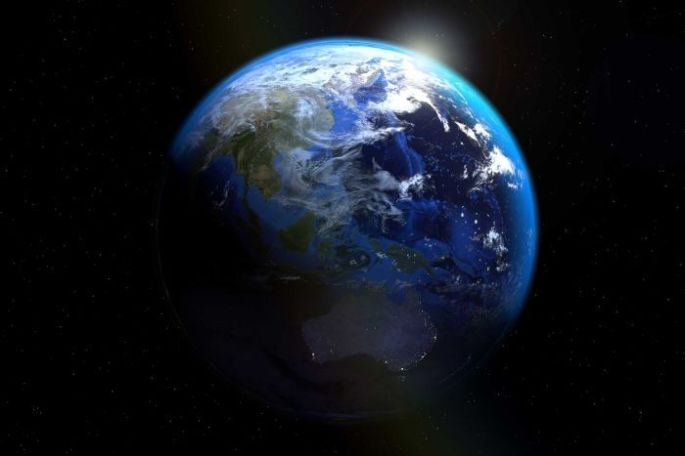
Image: Is Australia ready to play a significant role in the emerging global space industry, or will it fall behind? (Pixabay:PIRO4D)

Australia in Space: Our Story in the Stars – World Science Festival Brisbane

Imagination has no boundaries.

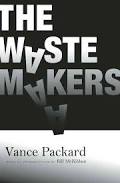
Are we moving to the bottom line – economy and environment and society? Back in 1960, Vance Packard first published The Waste Makers, [Penguin paper-back. 1963]. He dedicated his book to his Mother and Father ‘who have never confused the possession of goods with the good life.’ He warned about ‘ever-mounting consumption’, ‘the vanishing resources’, the ‘changing American character and the commercialization of American life.’

He had earlier written The Hidden Persuaders and The Status Seekers. We were getting the warnings throughout the 1960s, Not just warnings about these ‘waste makers’, but also about the deliberately built-in obsolescence. Now, with the latest digital devices, we are still encouraged to be the first with the new. It is even cleverer now. Governments have been slow to act but since some poorer countries no longer accept our rubbish, Australia’s Prime Minister is saying we need to care about plastic. Our wonderful ABC has brought us ‘The War on Waste’ for two years.

Veena Sahajwalla of the University of New South Wales: Credit UNSW

Many Australians recall our Australian Broadcasting Corporation program. The Inventors’! One of the judges on the panel was Professor Veena Sahajwalla. Remember all those Australian men and women bringing their inventions for consideration! Think of their creativity, solving problems, offering ideas for consideration.

Why have I made ‘Imagination has no boundaries’ the heading for this Sciences and Humanities post? Professor Sahajwalla’s passion has been to reduce waste. She has been called a ‘Waste Warrior’. The following story about her team’s work comes from Australia’s Science Channel.  See  About Us Publishers Series Sponsors Search

A technology that recycles waste into clothing and building products could be the answer to Australia’s crippling waste crisis.

According to a UNSW researcher, the technology is there to reach our waste management goals: Credit: Abdul Raheem Mohamed / EyeEm

Veena Sahajwalla, who invented ‘green steel’ technology that diverts millions of vehicle tyres from landfill, says her newer Microfactory ™ technology is a ready-made answer to deal with the nation’s current waste and recycling crisis.

According to a UNSW researcher, a ready-made answer to our waste and recycling crisis is available in the form of her Microfactory ™ technology.

“The technology doesn’t only address the waste issue, it’s also good for the economy.” And, I suggest, good for the environment and for us as a society!

“Sahajwalla commended the federal and state governments for agreeing to establish a timetable to ban the export of waste plastic, paper, glass and tyres, while building Australia’s capacity to generate high value recycled commodities, demand and capability in industry. “The heads of governments in Australia tasked Environment Ministers to advise on a proposed timetable and response strategy following consultation with industry and other stakeholders, and the Prime Minister says the timetable would be left up to the States, but I can’t help thinking that scientifically developed methods such as our Microfactory ™ technology is ready to go from lab scale to commercial scale to accelerate the COAG goals,” she explains.

“Importantly, this type of microrecycling science not only addresses the waste and environmental issues, but creates a whole new circular economy where materials are kept in use for as long as possible and can help local manufacturers create new products and items from reformed waste.”

Glass and textiles are turned into clothing and building products

“Veena and her team of scientists, engineers and materials experts through their microrecycling science have invented processes that can reform waste items like glass and textiles, including clothing, into flat ceramic building products and can also transform electronic waste into valuable plastic filament for 3D printing and metal alloys.”

“This coordinated decision to ban the exporting of our recyclable materials to countries that are increasingly resistant to taking our waste is a real game-changer in terms of enabling the spread of home-grown research innovations for the benefit of local industries,” Veena says.

“For example, we can take almost all waste plastic and turn it into a new, highly valuable commodity, 3D plastic filament, which is now mostly imported from overseas.”

“We can deploy this Microfactory ™ technology in rural and regional areas where waste is stockpiled and bring local industries and councils together to create new solutions”.

Professor Sahajwalla goes further: We should accept overseas selected waste.

“In fact, we should accept from overseas selected waste resources that contain valuable materials so that we could transform them into niche materials and in turn export them by using our Microfactory ™ technology to deliver clean and sustainable materials to the world.” Here’s imagination and, with it, evidence of capability for us to grasp.

Nicholas Fisk, UNSW Deputy Vice Chancellor (Research), says, “It’s time to rethink attitudes to all of the materials we discard and instead see them as renewable resources if we want to reduce our reliance on finite resources with major impact on the environment.”“This UNSW innovation promises to boost local manufacturers by providing novel opportunities through new supply chains.”

Some of the products made using the Microfactory technology. Credit: UNSW

From the Australian Academy of Science, the short citation read: “Veena Sahajwalla is an internationally recognised materials scientist, engineer and innovator who is revolutionising recycling science. . . . As Director of the Sustainable Materials Research and Technology Centre at UNSW, she has built a world-class research hub. Sahajwalla leads a highly innovative research program that fosters innovation and promotes collaboration with industry to ensure that scientific advances in sustainable materials and processes are readily translated into commercially-viable environmental solutions.”

Vance Packard ended his book, thus, in 1960, If adversity must be the prod for us to take a larger interest in such matters, it might still represent a gain. [p 302]

Reviewing The Waste Makers, in 1963, The Times wrote: ‘ [It] should be made compulsory prison reading for every politician, every economist, every advertising agent, and every industrialist who attempts to equate a high standard of living with the purchase of the unnecessary, the inferior and the short-lived article.’

For 2019, click on Australia’s Science Channel Smartphone Recycling in Australia

The KKK took my colours away

This is the title of a work of art by Jim Thalassoudis of Australia, done in lead white oil paint, wood and glass, 2017. It is impressive. To see it you will have to go to Chromatopia: An Illustrated History of Colour by David Coles, with photographs by Adrian Lander, published by Thames and Hudson, [p 217]. You’ll know the artist’s intention when you face the work that produced this challenging title. He is challenging white supremacy and all that it represents. But why does this work of art belong here with the Sciences and Humanities? This is a gift from Dr. Adriana Dutkiewicz, Senior Lecturer in Geological Science in the University of Sydney.

On the surface, it looks as if the book belongs on the HASS – Humanities, Arts, Social Sciences – side of that divide put in place by the reviewers in the 2015 Australian National Curriculum.

But David Coles takes me to minerals. I learn that Lead White is ‘the greatest and the cruellest of the whites’. What! Something made can be cruel? I discover it is “basic lead carbonate, formed by the reaction of lead with vapours of vinegar (acetic acid) and carbon dioxide.”

I have been taken across that artificial, troublesome divide into the world of the sciences, technologies, engineering and mathematics. In this case, it’s chemistry: one of the most important pigments for artists for 2,000 years. But lead is toxic.

David Coles gives me further information. “This is not such an issue for artists whose contact with it in paint is limited, but for workers in lead white factories the symptoms of poisoning include headaches, memory loss, abdominal pain and eventually death. In the late 19th century safer synthetic whites superseded lead white. Zinc white was its first competitor and then, in the 20th century, the introduction of titanium white almost completely replaced lead white’s commercial use.” [p 39]

Our children and their parents know how toxic it is because factories, like lead smelters for example, have been built too near homes, too near schools, with too little regard for its deadly impact on the brain: that is because of little concern on the technological side for the human side.

There we have it. Too much separation. Too little connection.

And we are back with a previous blog – the Periodic Table – science AND the humanities

But, back to Chromatopia. Such a marvellous, beautifully produced, holistic history of colour. Each pigment, each colour has a page, with a magnificent facing photograph. Look up ‘woad’. Look up ‘indigo’. See the connections that cross millennia. The ancient Egyptians first developed synthetic colours. Look up ‘mummy brown’. Look up ‘brazilwood’ – a country named after a wood! Consider graphite. Consider Mars colours, since Mars is on our space-based agenda.

But don’t forget.

Lead is still widely used for car batteries, pigments, ammunition, cable sheathing, weights for lifting, weight belts for diving, lead crystal glass, radiation protection and in some solders. It is often used to store corrosive liquids.

www.rsc.org/periodic-table/element/82/lead

Lead – Element information, properties and uses | Periodic Table

In South Australia secondary school students today might not, since the official 2015 curriculum does not encourage it, have the chance early in their secondary schooling to make connections across disciplines. They did at Marion High School, a ‘lighthouse school’ for South Australia destroyed by a Liberal government in 1996. Students began the process through a theme in Year 9. In Year 10 ‘Bridging’ was student-directed. In Year 11 Independent Study took them in all kinds of directions to the surprise of teachers and the delight of the Inventors group that came to see their work displayed in the Durney Resources Library. In 2019 the Year 12 research project that encourages these connections is seen too often as an infringement of subject time. That attitude results in the perpetuation of subjects as ‘silos’. That earlier initial approach depends upon the attitudes and skills of teachers.

Look what we miss by the segregation of disciplines in this thoughtless, divisive way. Effective learning values intersections*, crosses boundaries.

For fun, I looked up the saying, “Get the lead out’ and found the following:

Etymologists do agree it began to be commonly used in the United States beginning in the early 20th century, often as the slightly longer “get the lead out of your pants”. The idea is simply that the person whom you are telling this is moving slowly as if they are weighted down with lead, so “getting the lead out” would make them move faster.” Today, how do we get the lead out, find the less toxic alternative? Artists were able to do it.