The Gettysburg Address and Glasgow.

Who would have thought that the 1863 Gettysburg Address at that Cemetery, with its consecrated ground, would have relevance for an international conference in Glasgow, meant to be held in 2020 but delayed by the pandemic, reminding us of the impact of our human actions on the environment that surrounds all of us, increasing the awful uncertainty we are facing, even if some still refuse to face it!

Abraham Lincoln.

I am putting his address here for all who don’t know what the President said. He was a member of a Republican Party I doubt he would recognise today. President Abraham Lincoln, of what had become the disunited States of America, knew what the future for USA would demand after that Civil War, meant to end slavery, was over. He is speaking in the middle of that war on a battlefield. There would be two more years of war until 1865, with all the resonances still felt today.

Now it’s not just one nation. It’s all of us. But first, his memorable address.

‘Four score and seven years ago our fathers brought forth on this continent, a new nation,
conceived in Liberty, and dedicated to the proposition that all men are created equal. Now we are engaged in a great civil war, testing whether that nation, or any nation so
conceived and so dedicated, can long endure. We are met on a great battlefield of that war.
We have come to dedicate a portion of that field, as a final resting place for those who here
gave their lives that that nation might live. It is altogether fitting and proper that we should do
this. But, in a larger sense, we can not dedicate—we can not consecrate—we can not hallow—this ground. The brave men, living and dead, who struggled here, have consecrated it, far above our poor power to add or detract. The world will little note, nor long remember what we say here, but it can never forget what they did here.

It is for us the living, rather, to be dedicated here to the unfinished work which they who fought here have thus far so nobly advanced.
It is rather for us to be here dedicated to the great task remaining before us—that from these honored dead we take increased devotion to that cause for which they gave the last full measure of devotion—that we here highly resolve that these dead shall not have died in vain—that this nation, under God, shall have a new birth of freedom—and that government of the people, by the people, for the people, shall not perish from the earth.’

Abraham Lincoln. November 19, 1863.

What connection could this most memorable address to a nation have for the Planet?

In Australia, in 2020, a book ‘What Is To Be Done’, by Barry Jones, a former Minister of Science in the Hawke Federal government, was published by Scribe.

His first book warning us was Sleepers Wake: Technology and the Future of Work. Published first in 1982, it was reprinted many times – again in 1995. Ironically, one year before Howard came to power. Some of us were awake. Organisations like the Australian Conservation Foundation. The Wilderness Society. The Australian Marine Conservation Foundation, farmers moving to bio-diversity, protesters against logging, the Youth Climate Change Coalition but so many politicians – both Federal and State – would only wake if hit by storms, floods, fires, droughts and heatwaves.
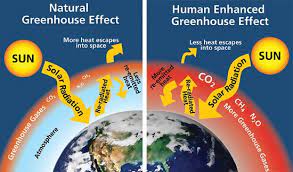
We had had warnings about the ‘greenhouse effect’ in the 1970s. Schools were teaching students about it in the 1980s. Bob Hawke would be called Australia’s Environmental Prime Minister. ‘From saving the Franklin River, to protecting Antarctica from mining, conservationists have praised his environmental legacy in the same way economists have lauded his financial reforms. Hawke was in the Lodge during the crucial period when Australia first became aware of – and tried to grapple with – the issue of climate change.’ Marc Hudson, Researcher, University of Manchester, UK.

The Hawke government established the Ecologically Sustainable Development Policy.

That was thirty five years ago!

That was almost immediately undermined by the Howard government that took power in 1996 and its Minister for Industry, Science and Resources, Nick Minchin, would work for its demise.

Just one year after Howard took power, in 1997, Malcolm Wallop came to Australia ‘to ignite a provocative debate on whether the world really needed a new global agreement to protect the planet from climate change.’ See The Carbon Club’ ‘Malcolm Wallop was the founder of Frontiers for Freedom and it was supported by some of the wealthiest men in America. Its dollars were helping to bankroll this Canberra show.’ That statement opens Chapter I, ‘Hearts and Minds’.

Marian Wilkinson, in The Carbon Club, makes clear how determined mining companies were.

By 1986 the Hawke government had decided the warnings from the UN had to be heeded. Nick Minchin now showed he cared more for his ideological position, backing Western Mining – supported by the Institute of Public Affairs – than everything that the scientists, including the growing discipline of ecology, had been revealing to us for decades.

The American Congress was informed about it in 1988.  

See the details about his behaviour in The Carbon Club, by Marian Wilkinson – this Australian/American club crippled our responses to climate change. Subtitled ‘How a Network of Influential Climate Sceptics, Politicians and Business Leaders Fought to Control Australia’s Climate Policy’. Published in 2020 by Allen & Unwin. Check its index for the role of Nick Minchin.

From long term evidence in mainstream Murdoch media across Australia, that Carbon Club Climate Group still infects Australia and is probably among the reasons we are at the bottom of the pile of the developed nations for the absence of quality in our approach to global warming. Our national government continues financing fossil fuel and fracking developments.

BUT

Barry Jones was a real Minister of Science and cared about the future.

Now he is trying again. 

What Is To Be Done’ has already been reprinted in 2020

It is a very detailed book. He is a scholar. He wants us to understand how we have reached this point. He takes us through it all and then he comes to one of the most important addresses he knows about dealing with the future even in the midst of a battle. Now, the battle for the Planet.

He has often asked himself the question about what Abraham Lincoln would have thought and said if he were confronted with the contemporary issues we are facing today.

The copyright on this book is so tight I have real concern about what I am doing now.

What Barry Jones has done is write an equivalent Gettysburg Address, limiting his work to 500 words like Lincoln’s Address.

In this homage to one of the greatest of the American Presidents, he includes some of Lincoln’s words, adapting them to the present.

‘A score of years ago, we entered a new millennium, facing great changes.’

 He goes on to the world population in rich and poor countries.

He goes on to the finite nature of the Earth’s raw materials.

He goes on to the gap between inconceivable wealth and poverty.

And to what that gulf is doing creating hatred and its consequences.

He goes on to the international, weather-based science obliterating borders and the withdrawal of nations that are turning inward, rejecting life-saving global collaboration.

He lists them all, describing all the attitudes that are ‘poisoning democracy’s wells.’

He says clearly how ‘evidence-based policies are displaced by appeals to fear and anger.’

Then he lists the tasks before us, the ‘fragile species’ – as Lewis Thomas also describes us.*

He says, ‘We must consecrate ourselves to the unfinished work of saving Planet Earth, our home, where our species, Homo sapiens, lives and depends for survival.’

I wish I could have put here the whole of Barry Jones’ 500 word adaptation that honours President Abraham Lincoln who looked beyond the American Civil War to the future. See pp 352 – 353 of ‘What Is To Be Done’. This great Australian, one of our national treasures, asks us – having gathered the evidence, not to be silent, but to speak truth to power again and again and again.

His book is subtitled – ‘Political Engagement and Saving the Planet.’

And this is ‘What Is to be done’ at the UN International Climate Change Conference in Glasgow. Democracies, like Australia and America and the UK, have the opportunity to present their credentials for all to see.

 Concluding his book,

Barry Jones tells us not to fall into despair or to ‘retreat to the caves’.

He says – Citizens have to be informed, then challenge and speak truth to power.

He tells us it won’t be easy. He tells us it will be exhausting. He tells us it will not be comfortable. But he has given us the evidence and it must be done.

And, as just an ageing patriotic Australian citizen in a democratic country, with the right and duty to vote, who cares about what kind of future we leave for the children, I know Barry Jones is right.

Not afraid For the future

The Circular Economy.

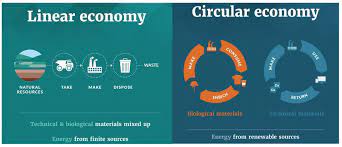
Instead of the approach to ‘growth’ that has cared nothing about waste, nothing about degradation. We are being encouraged to change our whole approach.

Our Australian public universities are doing so much for the future focusing on this move towards a circular economy, in place of the present one built on winners and losers.

This is despite the impact of the cuts Australia’s public universities had forced on them by the refusal of our national Coalition government to support them with Job Keeper during the 2020 pandemic. Instead, the Coalition put Australia’s public revenue into four private universities and into private schools. Such a contrast to the climate change approach being taken in USA by President Biden.

Listen to these audios from our wonderful, trustworthy, public Australian Broadcasting Corporation’s  Science Show presented by Robyn Williams taking us to the way we can go towards a circular economy where we recycle using clean energy.

audio

Robots for e-waste

Gwendolyn Foo is developing a robot to assist with the dismantling and separation of toxic e-waste.

audio

Important Australian inventors and innovators from the University of New South Wales and Sydney University,

Science and the public good – chemistry

Excerpts from an Australian Academy of Science symposium featuring Professors Veena Sahajwalla and Thomas Maschmeyer.

I have put up a blog about Professor Veena Sahajwalla before. She was responsible for developing green steel out of waste tyres.

Imagination has no boundaries

Aug 25, 2019 at 2:25 PM

No more of those hungry corporations – The Waste Makers’ – doing everything to increase profits regardless of their impact on the world the young will have to try to survive in.

We were warned about them back in the 1960.  We were also warned about ‘The Hidden Persuaders’ by the same author – Vance Packard.

Contrast the linear economy with its waste, its pollutants, its terrible armaments, its degradation being pursued by our Australian fossil-fuel, carbon capture and storage Federal government with so little care for tomorrow. Its destruction of people, of land, forests, environments and oceans. Australia even has a new company that calls its ‘renewable’ intending to make money through exporting wood chips from Newcastle! That is instead of recognising that regeneration of forests needs the logs that fall to become homes for bio-diversity.

The difference between design for renewal and dumping waste – like a Chinese tailings waste dump the Tasmanian government wants to put in an old growth forest!

BUT

We need enlightened politicians. We need to choose those who care about the future.

Those we have now are tied to the past, including people in power who have been climate sceptics and deniers and who, with too many others, have made their wealth through denying climate change since well before the 1990s. As David Harris would put it in his book, they have ‘Outsourced their consciences’.

Rupert Murdoch, who owns so much of the commercial media outlets across Australia’s island continent, at last says he is prepared to accept zero emissions by 2050 when we now know that we need to do much by 2030! At last! But he still funds those who would destroy rather than design for connections. See the destructive goals of the Institute of Public Affairs that is the Australian equivalent of the worst of the Republican approach in the United States of America.

Australia’s Prime Minister is very pleased with himself. He had just got Boris Johnson, the UK Prime Minister, to remove any concern or limitation about climate change and Australia’s behaviour in that regard from the trade treaty ‘Brexited’ UK is eager to make with Australia.

From ‘Greenpeace: Australia Pacific

‘The Morrison government pressured the UK to drop references to commitments to Paris Agreement temperature limits in order to get a post-Brexit trade deal over the line, in a leaked email obtained by Greenpeace. The revelation comes with The Morrison government expected to come under further pressure over climate policy when the foreign minister and the defence minister meet face-to-face with their US counterparts in Washington next week. And federal resources minister, Keith Pitt, will press ahead on plans to open up the Beetaloo Basin in the Northern Territory to fracking by giving taxpayer money to oil and gas companies despite a legal challenge to the government’s program.British ministers bowed to Australian pressure to drop key climate commitments for trade deal

No duty of care for the children?

While we must deal with the impact of the Delta variant everywhere!

Is what is happening ‘Down Under’ occurring north of the Equator?

“A federal court judge ruled in July that the government had a duty of care to protect Australian children from climate harm that would be caused by the expansion of a coalmining project.”

And that was before the IPCC gave us the latest warnings and we saw the devastation of fires and floods north of the equator.

This Australian government took less than a day to announce its appeal, which is due to be heard in the federal court in October.

Their Minister for the Environment is Sussan Ley. Children can’t vote!

I think of people swept away in mud slides, caught in floods that almost drown towns. And fires! And the betrayal of the young by fossil fuel corporations.

Please listen to this ‘Litany’ by Mark Tredinnik

It is An Elegy for the children.

Mark Tredinnick Poet, Speaker, Teacher, Writer

Litany: An Elegy
by Mark Tredinnick
#marktredinnick

Litpoetry: ‘Litany: an Elegy’ by Mark Tredinnick (Season 2, Episode 1) youtube.com
It is worth listening to again and again. His poem speaks to all of us.

4 hrs ·

Public

The actual link: https://youtu.be/bO720MIewVE 

We need the Australian Coalition government to take a responsible role towards global warming for the sake of Australian and the world’s children. Many Australians feel ashamed by our government’s lack of real commitment. It still supports big fossil fuel corporations like AGL, Adani and Woodside.

“But, one group of eight school students has launched a crowd-funding campaign last week to finance a court fight against the Morrison government.”

Lobbying groups with the power of AGL show us why we need the young of 18 to enrol to vote to fight for their future in a democracy!

Climate change

Melbourne student and climate activist runs for board seat at energy giant. Ashjayeen Sharif wants Australia’s biggest greenhouse gas emitter to be 100% renewable by 2030
Photograph: Kayzar/Greenpeace Australia Pacific,

‘AGL shareholders have real power to direct real change’: 18-year-old Ashjayeen Sharif has nominated for the company’s board.

Graham Readfearn@readfearn

The Guardian Mon 16 Aug 2021 03.30 AEST

“Ashjayeen Sharif, from Melbourne, wants the company to phase out its “dirty coal-burning power stations” by 2030 and replace them with 100% renewable energy.

“I think AGL shareholders should consider what matters for their families and their children and realise that climate change is a defining issue of our time,” he said.

“In a notice of the company’s annual general meeting, the AGL chairman, Peter Botten, wrote that shareholders are recommended to vote against Sharif’s nomination. The notice, which confirms Sharif will be allowed to speak at the AGM next month, says Sharif’s “skill set and experience would not add to the effectiveness of the board.”

AGL says emissions from its coal and gas power plants were 42.2Mt last financial year and make up about 8% of Australia’s entire greenhouse gas footprint. [As if 8% of any pollutant does not matter!]

Also at the meeting, AGL’s directors are recommending shareholders vote against a resolution asking the company to align its business with the Paris climate agreement to keep global temperatures “well below 2C”.

Sharif, a student at the University of Melbourne, said he had already experienced the climate crisis through more heat extremes and his family, some of whom live in Bangladesh, had been through floods and cyclones.”

“AGL shareholders have real power to direct real change,” he said. He would push the company to become a 100% renewable power generator within nine years “before we pass a turning point that leads to climate catastrophe”.

He said: “Even though I’m young and don’t have professional experience in directorships of a company, as Australia’s biggest climate polluter you just need an understanding of what matters in protecting the future for young people.”

“Last week AGL’s chief executive, Graeme Hunt, called for a better plan to coordinate the closure of Australia’s coal plants. The company has pledged to reach net zero in greenhouse gas emissions by 2050.”

Meanwhile – as Stephen Colbert would say –

European Union Unveils Climate Plan To Cut Emissions By 55% This Decade : NPR. A sweeping proposal unveiled by the European Union on Wednesday would look to cut emissions of the gases that cause global warming by 55% by the end of this decade

Sharif said: “It’s good to talk about long-term plans, but they shouldn’t be sitting around waiting for someone else to do it.”

Sharif, who has been involved in the School Strike 4 Climate campaign of marches since November 2018, said last week’s UN climate science panel report was “terrifying” and had galvanised his drive to fight for change.

“It was empowering because it reminded me that science and the reality that we live in is on our side,” he said.”

And Australia’s Youth Climate Change Coalition is fighting for climate justice.

‘One more mine does make a difference’: Australian children argue for the climate – and the law agrees

President Biden of USA knows facing these massive and vital changes demands significant investment of a nation’s revenue for the long term!

Note this example of what is happening now north of the equator.

ENVIRONMENT
Pacific Northwest Heat Wave Killed More Than One Billion Sea Creatures
The massive loss could destabilize local marine ecosystems
By Valerie Yurk,E&E News
Pacific Northwest Heat Wave Killed More Than One Billion Sea Creatures

There is no such thing as ‘Fortress Australia’, or ‘fortress’ anywhere, where global warming is concerned.

And we can’t forget about it while the Delta variant does its damage.

It is about time Australia’s Coalition government realises that fact

for the sake of the children here and across the globe.

Civil society has power!

In democracies, we do not have to stay with the past that is destroying us.

In the Tokyo Olympics Games the medals for all the 50 games are make from e-waste!

I am focusing on the intelligence, knowledge and active engagement for the future.

audio

Today’s Science Show – offering hope
Mining minerals with plants and time to supercharge recycling

with Robyn Williams

54mins 7secs

Sat 24 Jul 2021, 12:05pm

Latest stories

Load more chevron right

audio

Plants remediate polluted sites
Plants could be used to remediate polluted sites

Meet scientists tracking down rare plants which automatically accumulate metals and store them in their tissues!

audio

Fighters for the future for all of us.
Recycling brings benefits with low impact living

Sam Mostyn, Veena Sahajwalla and Tim Flannery discuss the enormous potential of recycling and how COVID offers the potential to change to a better course.

Go to

How One Scientist Is Giving Old Phones a Second Life With E …

https://www.discovermagazine.com › environment › ho…

14 Feb 2021 — Veena Sahajwalla launched a new way to recycle electronic waste that skips tons of … and is expanding her microfactories across Australia.

audio

Civil society has power
Civil society will usher in a better world

Peter Newman says in the future we’ll live in smart cities with distributed energy systems and change is coming and politicians will be driven by civil society and people demanding change.

What future are we deciding to choose?

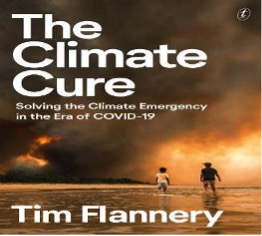
In Australia, in addition, we have a way forward in Tim Flannery’s book ‘Climate Cure’ and the vital role of sea kelp in so many ways. Even decreasing methane in cattle.

Look up the Climate Change Council and the Australian Youth Climate Change Alliance

From the United Nations we have ‘The Stubborn Optimist’s Guide to the Climate Crisis.
The authors outline two possible scenarios for our planet. In one, they describe what life on Earth will be like by 2050 if we fail to meet the Paris Agreement’s climate targets. In the other, they lay out what it will be like to live in a regenerative world that has net-zero emissions. They argue for confronting the climate crisis head-on, with determination and optimism. The Future We Choose presents our options and tells us what governments, corporations, and each of us can, and must, do to fend off disasters.

A cautionary optimistic guide.

Consider the climate changes people are facing across the world in this crisis.

In Asia – what are so many places facing?

Floods of major impact in China

Floods and landslides in India killing so many.

Following torrential rainfall, a landslide was triggered which swept through the Izusan neighbourhood of Atami, Shizuoka Prefecture, Japan on 3 July 2021

Heat waves, the like never felt before in Siberia.

Which country had a year’s rain in two days?

In Europe

Those disastrous floods destroying lives in towns in Western Europe

In North America – those unprecedented fires on the west coast

In South America –    May 18, 20214:12 AM  ACSTLast Updated 3 months ago

America’s Brazil’s pandemic-weary Manaus flooded by rising Amazon river

Reuters MANAUS, May 17 (Reuters) – Heavy rains in the Amazon rainforest have caused rivers to rise to near record levels, flooding small Brazilian towns and threatening the state capital Manaus with another disaster after it was severely struck by the coronavirus pandemic. Across the state of Amazonas, more than 400,000 people have been affected by flooding, said the state’s Civil Defence service, many of whom were evacuated as water levels climbed. The Rio Negro river was rising by about 3 centimeters (1 inch) a day and on Monday streets in the center of Manaus were already under water, according to city hall. “The water level is… the third highest in the history of the city. If it continues like this, it will pass the record 2012 flood,” said mayoral spokesman Emerson Quaresma.

On the African continent?

11 May 2021 — The African continent alone experienced over 2,000 major disaster events during the last three decades with most of them being extreme weather, …

In Australia, – and it is winter, for much of the continent, severe tropical cyclone Seroja. A town in the Pilbara flattened. In New Zealand, in Wellington, storms and floods.

Weather Australia 2021: Sydney Harbour Bridge disappears …

https://www.9news.com.au › wild-weather › weather-au..

BUT – check the UK and Northern Ireland

From Bloomberg Green ‘inbox.’ Interesting news.

The U.K.’s national weather service declared its first-ever extreme heat warning on Monday. The alert now sits alongside age-old ones, such as thunderstorms, fog and lightning. In explaining why a new category was needed, the Met Office was unequivocal: “Research shows that, as a result of climate change, we are now much more likely to see prolonged spells of hot weather.”

Here is the danger civil society faces but it has the capacity to reject all that Sky News represents.

You won’t, however, find any mention of climate change in the Sky News story describing how Northern Ireland, a part of the U.K., hit the hottest-ever temperature recorded. You will find plenty of photos of people enjoying themselves at parks and beaches.’

This is the point. Murdoch’s Sky News, in the UK as well as Australia, like Fox News in USA, is driven by an ideology that has no interest at all in the quality of the future for our children.

In the face of the intransigence of many governments across the globe, we must value people being optimistic, doing their best to try to bring out the best in us.

Professor Peter Newman, contributor to July 24th 2021, important ABC Science Show presented by Robyn Williams, has written 17 books and 286 refereed articles. Peter’s book with Jeff Kenworthy ‘Sustainability and Cities: Overcoming Automobile Dependence was launched in the White House in 1999 and their most recent book is The End of Automobile Dependence’.23 May 2011. In 2021, only the Coalition government in Australia, with its Minister for Energy, calls electric vehicles ‘luxuries’!

So, this Australian Coalition will not invest in EV vehicles. In fact it is proudly funding petrol and diesel machinery for farmers to help them recover from droughts. Using our revenue to do it. And there’s that gas-fired power house for NSW for $600 million It rejects the need to do much more about climate change for our Great Barrier Reef.

UK says –

Electric cars ‘will be as cheap as petrol vehicles by 2025’

Civil society has power. Democracies need not be tied to the destructive past,

Fighting for the Future.

First, this month – in USA the fight against Formosa Plastics.

News from the Center for Biological Diversity – Meet Sharon Lavigne of Louisiana.

For Immediate Release, June 15, 2021

Contact:Anne Rolfes, Louisiana Bucket Brigade, (504) 452-4909, anne@labucketbrigade.org
Julie Teel Simmonds, Center for Biological Diversity, (619) 990-2999, jteelsimmonds@biologicaldiversity.org
Sharon Lavigne, RISE St. James, (225) 206-0900, sharonclavigne@gmail.com

Leader of Campaign to Stop Formosa Plastics Wins Top Environmental Award

Goldman Prize Honours Louisiana’s Sharon Lavigne of RISE St. James

(Photo by L. Kasimu Harris/Louisiana Bucket Brigade)

SAN FRANCISCO — Louisiana’s Sharon Lavigne, who has led an international environmental campaign to stop Formosa Plastics from building one of the world’s biggest petrochemical complexes in her predominantly Black community, will be honored with a Goldman Environmental Prize today. She was recognized for stopping the Wanhua plastics plant, proposed for St. James Parish, Louisiana, in 2019 and her ongoing work against other polluting projects proposed for the region.

‘Her allies say they hope the honor — the environmental movement’s biggest annual award — will help Lavigne build on her past success to realize her current goal of preventing the Formosa Plastics project from ever being built.

Lavigne has helped attract national media attention and support from thousands of individuals around the country, as well as faith groups, national and international organizations, members of Congress and the Biden administration, attorneys general from other states, and United Nations human rights experts, who have called on officials to reject the Formosa Plastics project.’

Links:

Goldman Environmental Prize video of Sharon Lavigne.
Goldman Environmental Prize winner page for Sharon Lavigne.

The Center for Biological Diversity is an American national, nonprofit conservation organization with more than 1.7 million members and online activists dedicated to the protection of endangered species and wild places.

Read the whole article to see how vital her fight is – if people say nothing!

“When the governor of Louisiana came to St. James Parish and announced Formosa Plastics was coming to town, Sharon Lavigne was brave enough to stand up and say no. Sharon said she had a different vision for her historic Black community,” said Anne Rolfes, director of the Louisiana Bucket Brigade. “When parish officials told her that Formosa was a done deal, she insisted that it was not. Her leadership, courage and vision are rewarded today by the Goldman Prize. And she would be the first to say that this is just the beginning. The fight has just begun.

Lavigne started RISE St. James with her neighbors in the already-polluted corridor along the Mississippi River in Louisiana known as Cancer Alley or Death Alley to fight new industrial projects from being built in her community. Last year Lavigne’s group, Louisiana Bucket Brigade and Healthy Gulf challenged the project by filing a federal lawsuit, represented by the Center for Biological Diversity. That suit resulted in a construction delay and the permit being suspended pending further review.

“Sharon is in an intense, ongoing fight for the life of her community and our planet. We hope this richly deserved honor and recognition helps Sharon reach her goal of stopping Formosa Plastics,” said Julie Teel Simmonds, a senior attorney at the Center. “Sharon has battled through pollution-related illness and the loss of loved ones, and she keeps faithfully fighting environmental racism. Under the leadership of this amazing woman, we’re going to stop Formosa Plastics and advance environmental justice in this country.”

Lavigne has helped attract national media attention and support from thousands of individuals around the country, as well as faith groups, national and international organizations, members of Congress and the Biden administration, attorneys general from other states, and United Nations human rights experts, who have called on officials to reject the Formosa Plastics project.

Formosa Plastics is proposing to build a 14-plant complex to turn the U.S. oversupply of fracked gas into mountains of new plastic, much of it destined for throwaway packaging. The complex would emit 800 tons of toxic air pollution each year, doubling toxic air emissions in St. James Parish. It would also generate more than 13 million metric tons of greenhouse gas pollution.

The U.S. Army Corps of Engineers suspended its permit for the project in November 2020. More than 20 groups and 40,000 individuals have demanded that the Army Corps and Biden administration more thoroughly review the project and its environmental justice issues and ultimately reject it.

“Americans have been shouting ‘Black lives matter,’ and we need Formosa, the Army Corps and local officials to listen,” Lavigne said last July when the Center filed an injunction to force Formosa to delay work on the project. “They should listen to the people of St. James. Why should we sacrifice our homes, our land and our lives so this huge company can make money? They just aren’t concerned about people, and it angers me.” They are not concerned about what plastics do, or about the impact of fracking.

 The Center for Biological Diversity is a national, nonprofit conservation organization with more than 1.7 million members and online activists dedicated to the protection of endangered species and wild places.

And in the southern hemisphere

in Australia, ‘Down Under’ Our not-for-profit organizations have to fight so hard.

Their volunteers give all they can. And how we need it. In Cornwall, while the G7 were talking real move for positive climate change action – despite these plastics and petrochemical factories – Australia’s Prime Minister was bent on his commitment to the very expensive carbon capture and storage in the mines of mining companies, like Glencore, for example,with questions about its commitment to effective rehabilitation.

And just as I write now, one part of the Coalition, the supposedly ‘National’ Party, wants to trash our major public eastern waterway. The Murray-Darling-Baaka system is just as important to Australia as the Mississippi river system is to USA. They want to support big business, so much of it at its headwaters. And we are just recovering from years of drought! And we are the driest habitable continent on our planet. And our Government is trying to pass legislation to use our revenue, set aside for renewable energy, for coal in Queensland and a valley in NSW and for gas and gas pipe lines across the fertile agricultural land in the NSW Liverpool Plains and ‘fracking’ on First Nations land.

In Queensland, the Lock the Gate Alliance has a fight on its hands.

It is Queensland and New South Wales where the worst fossil fuels – coal and gas – corporations have the greatest political support.

Notice their commitment to the land and the water!

Many issues affect the water resources and ecosystems of the Murray-Darling-Baaka System including salinity, erosion, blue-green algal blooms, water quality, and invasive species. Climate change and resultant possible increases in drought pose a significant risk to the availability of surface water in the Murray-Darling-Baaka. All made worse by politics! We have to thank all the fighters for the future with their various methods.

Thank you Tuesday and Carol.

These two fine women have got together a flotilla to go down the river to show what is being done to it by turning our main publicly-owned eastern public waterway into the market. Protecting its vital role for the environment and the bio–diversity it makes possible gets harder and harder every day as politicians don’t care about its future.

Part of our great public waterway has its headwaters in Queensland.  The Murray-Darling system has been turned into a market with licences selling its public water to businesses. The fact that a river must flow to its mouth is of no concern to corporations whose profits are made up stream. One politician made clear he couldn’t careless!

Two women, officially ‘retired’ but not retired from the need to care about our major public waterway.
Watch the beautiful short film about their journey >> 
I hope visitors will be able to see it and tell me they have!

I’m afraid you might not be able to see the film of their beautiful journey along the river and their call out of May Day, May Daythe universal call – for help and rescue. They had a little flotilla of friends on their sometimes home-made boats showing us just the dangers this lifeline faces. [I am not yet good enough with this machine.] The problem is that the politicians, and the people who elect them, care too little for our public waterways and our environment. Why do 51% of us elect them when we know what drought and extreme weather events do? How are the public waterways surviving around the world? Do they face these problems? In democracies we should be able to do something about it. When we choose or have thrust on us demagogues? What then?

We provide the revenue! But we vote in this or that party without thought. Now we have a new Deputy Prime Minister whose job, for his political party, is to make everything worse for our environment. When this Member for New England was Minister for Water, he paid a private company $80 million of our revenue to buy back a flood plain that should never have been sold to it, with its tax haven, in the first place.

However, there is good news from Adelaide –

‘Green plastics – Blue Ocean’ –Is it possible?  This is the combination of the work of

a scientist and an artist at Flinders University.

The meeting is over but contact the Centre for Marine Bioproducts Development at Flinders University.
So different from the attitude of Formosa Plastics, isn’t it! Not just money-making in the present. The sciences and humanities are working for the future of humanity and the planet we must rely on.

Then there are these three remarkable women fighting for decades for their land.

The Australian Conservation Foundation provides as annual award in the name of Peter Rawlinson. Here are the 2019 award winners

Here is what the Australian Conservation Foundation stands for

‘We are dismantling the old story that people and nature must be in conflict. We are creating a new story – a story of connection. In this story, we value the whole web of life and the incredible diversity of life on Earth.’

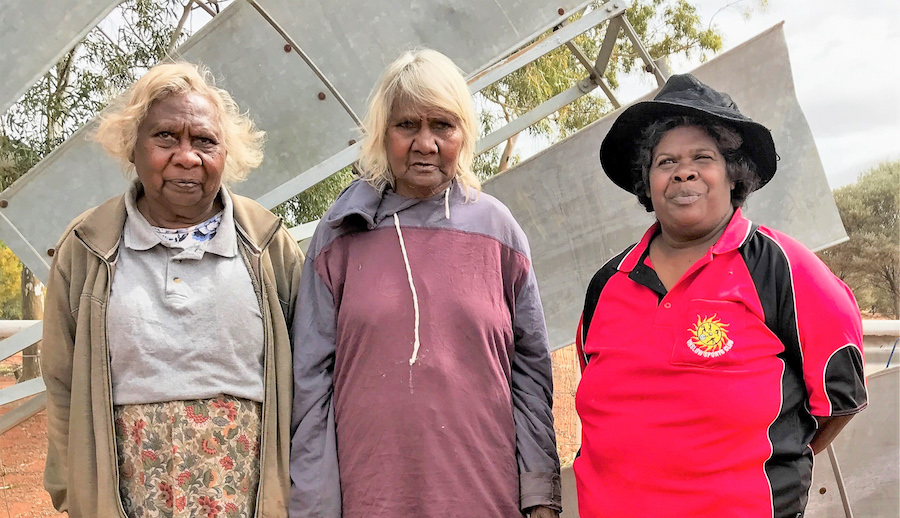
Shirley Wonyabong, Elizabeth Wonyabong and Vicki Abdullah.

Three Tjiwarl women, Shirley, Elizabeth and Vicki, were awarded in recognition of their decades-long campaign to protect their country and culture from a proposed uranium mine at Yeelirrie in outback Western Australia.

‘The Australian Conservation Foundation acknowledges their tireless work speaking up for country and culture around campfires, in politician’s offices, on the streets of Perth and in Western Australia’s highest court. Over the decades they have seen off at least three mining companies, including BHP, and have given strength and courage to their own community and many others.’

Read their story

Elizabeth, Vicki and Shirley at WA Supreme Court. Photo: Conservation Council of Western Australia.

And our Australian Conservation Foundation – the ACF – tells all Australians why the Australian Prime Minister’s obstinate insistence on Carbon Capture and Storage [CCS] is not good for us. It is a delaying tactic, in fact, to allow fossil fuel magnates to keep going and it costs six times more than wind plus battery storage.

Back to the Northern Hemisphere for a moment, then back ‘Down Under’

The G 7 now says we need to protect 30% of our oceans. So far only 2% is protected. News from the ABC’s Science Show on Radio National with Robyn Williams as the presenter.

Go to ‘Australian Odyssey’. See what warming is doing to our east coast current. See my blog focusing on the work of another remarkable woman, Dr Sylvia Earle, pushing for Maritime Protected Areas to save the oceans from over fishing and deep-sea drilling.

Race to map Ashmore Reef as aquatic worlds change fast with warming waters

Scientists are mapping the diversity of Ashmore Reef. The area is changing fast with warming seas.

8mins 39secs

Sat 12 Jun 2021, 12:04pm

The fight for our future in the face of still too much corporate indifference goes on.

Fighting for clean energy.

On World Environment Day.
Very good news from Radio New Zealand – RNZ.

Listen

‘In a landmark decision, Royal Dutch Shell has been ordered by a court in The Hague to drastically reduce its global carbon emissions. The oil giant was told it has a duty of care, and that the level of its emission reductions should be brought in line with the Paris Climate Agreement. Shell now needs to cut emissions by 45 percent – compared to its 2019 levels – by the end of 2030.’

David Tong is a former litigator and a Senior Campaigner at Oil Change International. He joins the show to discuss the case and its wider implications.’

Just as the Australian Prime Minister goes to the meeting in Cornwall with his gas-fired power house, and the ground water he gave to the Adani Carmichael coal mine in Queensland for possibly 30 years, he is saying this is the ‘Australian’ way, but there are so many of us saying, “No, it is not. Definitely not. We want renewable energy and a clear policy for climate change.”

New Zealand and Canada, both with clear climate change policies, do not have the Murdoch media! They do not have to fight its deleterious impact.

However – in Australia, our Coalition government is being fought in law.

Our Federal Court has told the Federal Minister for the Environment that she, currently Sussan Ley, has a duty of care to the children who are the most vulnerable in the future for the actions that governments take, too often in the interest of the profit-first few, in our name and on our behalf. Decisions she makes – like possibly supporting the Whitehaven coal mine extension – should take into account the future impact on the young.

The court considered evidence in the case from the Intergovernmental Panel on Climate Change, CSIRO, the Bureau of Meteorology, and globally renowned ANU climate scientist Will Steffen.

In a tear-jerking moment during the Federal Court’s live-streamed summary, the court found that one million of today’s Australian children are expected to be hospitalised because of a heat-stress episode, that substantial economic loss will be experienced, and that the Great Barrier Reef and most of Australia’s eucalypt forest won’t exist when they grow up.‘ And Australia is a developed country! Why are we letting this happen?

And the Coalition government is being challenged by so many non-government groups – to be threatened with prison for protesting for climate change if their legislation is passed by the Senate.

Meet Climate Action Network for Australia – Read CANA’s Common Agenda which is to rapidly cut Australia’s climate pollution. For information on joining the network, click here.

WE ARE A NETWORK THAT SUPPORTS OUR MEMBERS AND THEIR ALLIES TO TAKE ACTIONS TO PROTECT PEOPLE AT HOME AND ABROAD FROM CLIMATE CHANGE, TO SAFEGUARD OUR NATURAL ENVIRONMENT, AND TO BUILD A FAIR, CLEAN, HEALTHY AUSTRALIA FOR EVERYONE.’

The CANA Annual Report for 2019-20 details how our network members support each other to build a powerful, connected, diverse and innovative climate movement. To view all our Annual Reports, click here.

The decline of koalas in NSW and Queensland is due to habitat loss – more loss is intended by the NSW government with the removal of an important corridor.

However – Good news from the northern hemisphere.

Australia has been told we can develop lithium batteries. Ross Garnaut said it in his book Super Power.  Elon Musk has reinforced it. See how solar power, wind power and his Tesla batteries have taken South Australia to the forefront of renewable energy across the Nation. However, Australia’s national grid is inadequate. There’s little effort by government to make it fit for this century?

In America, President Biden is investing in clean energy for his country. He has recognised the positive financial role of government for the future. Here is one of the results of investment in the future in research and development at Harvard. Long lasting lithium batteries

The following research is published in Nature.

‘Long-lasting, quick-charging batteries are essential to the expansion of the electric vehicle market, but today’s lithium-ion batteries fall short of what’s needed — they’re too heavy, too expensive and take too long to charge. . . . . . 

A lithium-metal battery is considered the holy grail for battery chemistry because of its high capacity and energy density,” said Xin Li, associate professor of materials science at the Harvard John A. Paulson School of Engineering and Applied Science (SEAS). “But the stability of these batteries has always been poor.”

Now, Li and his team have designed a stable, lithium-metal, solid-state battery that can be charged and discharged at least 10,000 times — far more cycles than have been previously demonstrated — at a high current density. The researchers paired the new design with a commercial high energy density cathode material.

This battery technology could increase the lifetime of electric vehicles to that of the gasoline cars — 10 to 15 years — without the need to replace the battery. With its high current density, the battery could pave the way for electric vehicles that can fully charge within 10 to 20 minutes.

“Our research shows that the solid-state battery could be fundamentally different from the commercial liquid electrolyte lithium-ion battery,” said Li. “By studying their fundamental thermodynamics, we can unlock superior performance and harness their abundant opportunities.” Such good news!

But, on this World Environment Day, this warning from the northern hemisphere.

Struggling Seabirds Are Red Flag for Ocean Health

These sentinels of marine ecosystems point to the damage climate change, overfishing and other human pressures are causing

Northern gannet birds. Credit: Getty Image

‘Seabirds are “sentinels” of ocean health. If marine ecosystems are suffering, the birds will be among the first to show it.

Now a major study finds that seabirds in the Northern Hemisphere are already struggling. And without extra precautions, those in the Southern Hemisphere might be next.

The findings point to broader patterns of environmental change across the world’s oceans. Climate change, combined with pollution, overfishing and other human activities, is steadily altering marine food webs. Food sources are shifting. Some fish populations are dwindling or migrating to new areas.

As a result, seafaring birds perched at the top of the food chain are struggling to breed and raise their young. They’re canaries in the coal mine, so to speak—clear indicators that something is wrong with the entire ecosystem.

“Seabirds travel long distances—some going from one hemisphere to the other—chasing their food in the ocean,” P. Dee Boersma, a biologist at the University of Washington and one of the study’s authors, said in a statement. “This makes them very sensitive to changes in things like ocean productivity, often over a large area.” See Andrew Darby’s Flight Lines on migratory birds.

The new study, published yesterday in the journal Science, examines 50 years of data on 66 seabird species worldwide.

Back in Australia on World Environment Day

The Coalition avoids responding to the Graeme Samuel Report on the 1999 (2000) Environmental and Bio-diversity legislation. It is ‘not fit for purpose.’

There is real fear that the changes this Coalition intends to make will weaken it further.’ And we are being governed by legislation drawn up in a way that set out to protect ‘the carbon club’ in 1999. See Marian Wilkinson’s book.

Go to today’s ABC RN’s Science Show with Robyn Williams covering so much for World Environment Day, Take in what we are facing 12 years on!

A call for strengthened environmental legislatioN
Despite five vertebrate extinctions in 1999, critics say proposed amendments to the Environmental Protection and Biodiversity Conservation Act will weaken existing legislation.’

Are our citizens, as voters, going to let that happen?

In a democracy citizens, as voters, set the directions for the future.

Some good news

Young people fight for their future.

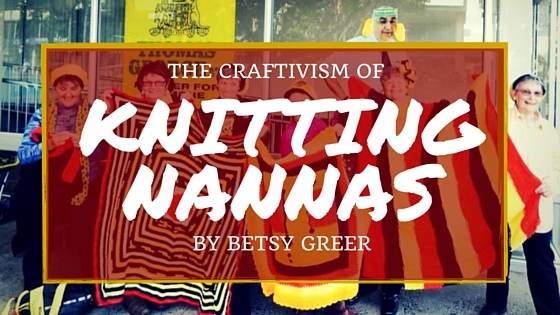
Supported here by the Federal Court and the Knitting Nannas.

First of all. In Canada. The International Children’s Peace Prize.

This 13-year-ols Indigenous girl has been nominated for a global peace prize

“Autumn Peltier already has years of advocacy behind her. She’s met the Prime Minister, she’s attended the Assembly of First Nations Annual General Assembly and she’s marched on the highway in the name of water protection. At just 13 years old, Peltier is now a nominee for the International Children’s Peace Prize.”

The 151 nominees for the International Children’s Peace Prize were recently announced and the only Canadian candidate is this Anishinaabe teen from Wikwemikong First Nation.

Peltier has been advocating for clean drinking water since she was about 8 years old and is already considered a water protector — just like her aunt Josephine Mandamin, who received the Lieutenant Governor’s Ontario Heritage Award for Excellence in Conservation in 2016.

Launched in 2005, the International Children’s Peace Prize is awarded to a child who has worked to improve children’s lives around the world.”
Article Source: www.globalcitizen.org

I set up this blog in 2019 to reach voters in our democracies with the best information I can find. Too often fossil fuel mining corporations, makers of pesticides, makers of artificial fertilizers and plastics have done and are doing so much to prevent the positive action we need to be taken. I search for hope in the face of governments, too often my own, nations and corporations only concerned with short-term profit on land, in public waterways, in coastal areas, in oceans and in the atmosphere. Often I find information in our wonderful public ABC’s Radio National’s Science Show. This month I go to Australia’s Federal Court first of all. In this May blog I celebrate young people and the grandmothers. But governments can still be acting against their future interests. So ‘Some good news – but you’ll see when you reach the budget.

At last, the Australian Federal Court follows the Netherlands.

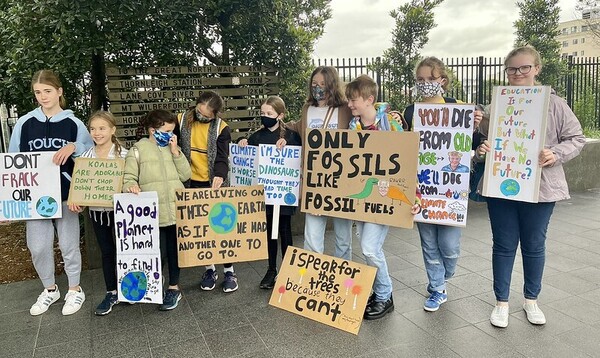
So many students joined the March4Climate Change of Friday May 21st.The pity is they can’t yet vote. They are not yet 18. So, they must rely on the adults to do what is right. Now, our Federal Court has spoken for the young.

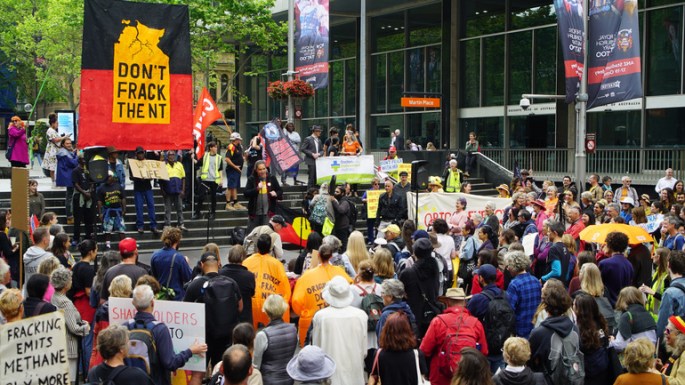
‘Don’t frack on our future’ But – the Northern Territory government is likely to let fracking take place on First Nations land with the support of the Federal government

The Netherlands began to recognise the impact of climate change on children in 2015. Governments have a duty of care for the children who must live in the nation and the world that voters choose to create in democracies. Ones that cares about climate change like Germany, Sweden and the Netherlands. Or one like Australia’s national Coalition government. However, in 2021, despite being in the midst of a pandemic, Australia’s Federal Court has spoken for the vulnerable young people of Australia.

Enough Americans voted for President Biden prepared to invest his nation’s wealth in a range of positive ways to support actions to bring about a safer, cleaner future for everyone in USA including the children yet to be born.

Read the article. Our e-paper with academic integrity is ‘The Conversation’
In Australia, too much of the commercial media is controlled by Murdoch.

Dealing with a recalcitrant Coalition government that prefers to support coal and puts $600 million into a gas-fired power house with money from our revenue since the market refuses to have anything to do with it, the young people of Australia have taken the Minister for the Environment to the Federal Court. She – Sussan Ley – and all future Ministers for the Environment now have a duty of care to young people. The young people, their future, must be considered in her decisions. BUT she can choose to act against the interests of the vulnerable. Think of what it says about the government if she does act against the children’s future. That is what the voters need to be taking into account. This Coalition will try to get us only to focus on the pandemic.

In a landmark judgment, the Federal Court found the environment minister has a duty of care to young people

May 27, 2021 5.12pm AEST

Author is Laura Schuiiers, Research Fellow in Environmental Law, The University of Melbourne.
disclaimer Statement

Laura Schuiiers does not work for, consult, own shares in or receive funding from any company or organisation that would benefit from this article, and has disclosed no relevant affiliations beyond their academic appointment.

We believe in the free flow of information
Republish our articles for free, online or in print, under Creative Commons licence.
 ‘This morning, the Australian Federal Court delivered a landmark judgement on climate change, marking an important moment in our history.

The class action case was brought on behalf of all Australian children and teenagers, against Environment Minister Sussan Ley.

Their aim was to prevent Ley from possibly approving the Whitehaven coal mine extension project, near Gunnedah in New South Wales. They argued that approving this project would endanger their future because of climate hazards, including causing them injury, ill health, death or economic losses.

The court dismissed the application to stop the minister from approving the extension. But that’s just the beginning.

Before making those orders, the court found a new duty it never has before: the environment minister owes a duty of care to Australia’s young people not to cause them physical harm in the form of personal injury from climate change.

‘Australia will be lost’: the court’s moving findings

The court considered evidence in the case from the Intergovernmental Panel on Climate Change, CSIRO, the Bureau of Meteorology, and globally renowned ANU climate scientist Will Steffen.

In a tear-jerking moment during the Federal Court’s live-streamed summary, the court found that one million of today’s Australian children are expected to be hospitalised because of a heat-stress episode, that substantial economic loss will be experienced, and that the Great Barrier Reef and most of Australia’s eucalypt forest won’t exist when they grow up.

It found this harm is real, catastrophic, and – importantly from a legal perspective – “reasonably foreseeable”. In decades past, courts have considered climate change to be a “speculative”, “future problem”.

That is no longer the case. The court concluded, in a moving paragraph from the written judgment:

It is difficult to characterise in a single phrase the devastation that the plausible evidence presented in this proceeding forecasts for the children. As Australian adults know their country, Australia will be lost and the world as we know it gone as well.

The physical environment will be harsher, far more extreme and devastatingly brutal when angry. As for the human experience – quality of life, opportunities to partake in nature’s treasures, the capacity to grow and prosper – all will be greatly diminished.

Lives will be cut short. Trauma will be far more common and good health harder to hold and maintain.

None of this will be the fault of nature itself. It will largely be inflicted by the inaction of this generation of adults, in what might fairly be described as the greatest inter-generational injustice ever inflicted by one generation of humans upon the next.

To say that the children are vulnerable is to understate their predicament.

Establishing a new duty of care

The children took a novel route in asserting the federal environment minister owed them a duty of care. A duty of care means a responsibility not to take actions that could harm others. A duty of care is the first step in a claim of negligence.

A similar duty was found in the Netherlands in 2015, as a global first. In 2019, the Supreme Court upheld that duty – the Dutch government owed it citizens a duty to reduce emissions in order to protect human rights.

Other cases around the world were inspired by that success, including the one decided in Australia today.


Read more: ‘A wake-up call’: why this student is suing the government over the financial risks of climate change


The court today didn’t say the minister has a duty to stop all coal projects of any size, as it was only considering the Whitehaven extension project. But this is still hugely significant.

Australia has been repeatedly criticised on the global stage for its stance on new coal and climate change more generally. Now, we may find the decisions made by its environment ministers could amount to negligent conduct.

The buck doesn’t stop at governments

Back in the Netherlands, something else significant happened this week — the world learned the buck doesn’t stop at governments.

In what’s been described as “arguably the most significant climate change judgement yet”, a court in The Hague ordered Royal Dutch Shell, a global oil and gas company, to reduce its carbon dioxide emissions by 45% by 2030 compared with 2019 levels, via its corporate policy.

This could have far-reaching consequences for oil and gas companies all over the world, including in Australia.

So now we have a dual momentum — governments need to be careful what they approve, and fossil fuels companies need be careful what they propose.

Putting the minister on notice

It’s important to recognise Sussan Ley hasn’t made a decision yet to approve the coal mine extension. The young Australians were seeking to stop her from approving it, and in that they didn’t succeed.

However, her responsibility to young people has now been formally recognised by the court.

Today’s children are vulnerable to climate change and they depend on the environment minister to protect their interests. We don’t know yet if the minister will approve the mine extension, or if she does, whether that means she has breached her duty to the children. But we do know how significant the harm from climate change will be.

What’s more, in 2019, a NSW court confirmed now is not the time to be approving new coal, and every coal mine counts.

Today’s judgement opens the door for future litigation if the minister is not careful about approving projects that could harm the next generations of Australians.

But importantly, it puts the federal environment minister on notice — while political terms might be only short, decisions now have intergenerational consequences for the future.

Short-term financial gain can have detrimental consequences for the health and economic wellbeing of those who can’t vote yet.’


But the children are not alone. Meet the Knitting Nannas.

These grandmothers are against gas, against coal and they are using their skills in knitting to demonstrate to politicians they want a clean energy future for their vulnerable grandchildren. And those grandmothers’ knitting needles could become powerful pencils in the privacy of the secret ballot. It reminds me of the world-wide crocheting for coral reefs encouraged by Margaret Wertheim, that outstanding science journalist.

BUT  – Here is the central problem the children and their grandmothers continue to face.

It is what this Australian Coalition government’s 2021 budget tells them.

Information in The Guardian – Guardian Australia is the Australian website of the British global online and print newspaper, The Guardian.Adam Morton Environment editor @adamlmorton

Thu 13 May 2021 03.30 AEST

‘Last modified on Sat 15 May 2021 13.12 AEST There was little talk of the climate crisis or the environment in Tuesday’s budget, perhaps because the Morrison government has succeeded in framing the climate crisis and the environment as side issues.

But once you dig into the detail there is plenty to know. Here are some key points.

Will there be a green recovery?

‘Not based on this. There has been a global push for a climate-focused move to kickstart economic growth from the pandemic, pushed by the International Monetary Fund, the United Nations and several national leaders.

The response has been mixed, but countries that Australia likes to compare itself with have embraced the idea. The US president, Joe Biden, has proposed a US$2tn infrastructure plan to drive “transformational progress” in tackling climate change, including US$174bn for electric vehicles and support to make the electricity grid emissions-free by 2035. Germany has dedicated US$47bn to green recovery measures, including $9bn to “green hydrogen”. Even fossil fuel-rich Canada has committed more than US$36bn to clean energy.’  US$2 trillion! President Biden knows such investment is needed.

In contrast, the UN environment program found Australia had done the least among the world’s 50 largest economies to drive a green recovery. There is nothing to change that in the budget.

The government remains averse to even using the word “climate”. It appears in just two items in the 197 pages of budget paper number two, which lays out proposed spending measures for the next four years.

Elsewhere, a table dedicated to “climate spending” confirms just 0.3% – 30c in every $100 – of budget spending is dedicated to addressing the climate crisis. The government expects that to fall to 0.2% in 2022-23.’

While there is all this evidence of such limited interest by the Australian government in the climate crisis on land, that terrible logging destructive of bio-diversity and costing us great carbon sinks continues unabated, there is this glimmer of hope in Marine Protected Areas.

Refer to the blog related to the work of Dr Sylvia Earle.

Bridging the world of sciences and humanities, – July 2020

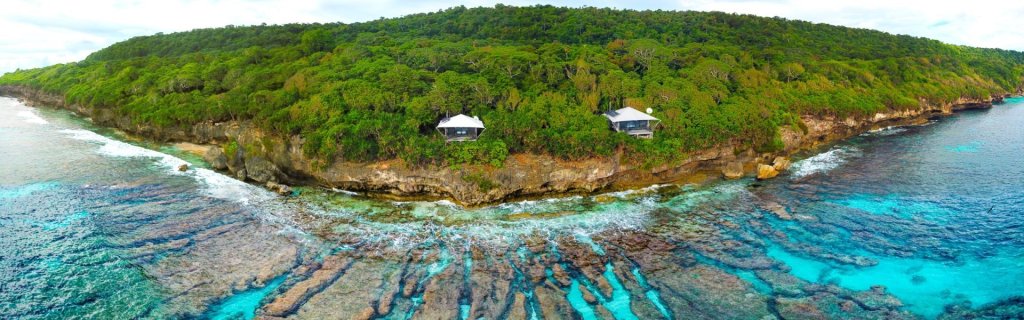
Save Our Marine Life (Australia) is in Christmas Island.
Christmas Island National Park

‘BREAKING: Incredible news! The Australian Government has announced plans to establish two new marine parks around the spectacular Christmas Island and the Cocos (Keeling) Islands.

These will be the world’s next big marine parks, providing critical protection for globally significant marine life in an area twice the size of the Great Barrier Reef Marine Park!

🦀Christmas Island has thriving rainforests, deserted beaches and a reef that provides shelter to extraordinary rare seabirds, crabs and marine life.

🏝️The Cocos (Keeling) Islands are Australia’s unspoiled tropical island paradise. Their azure waters are home to an incredible array of diverse marine life including tropical fish, corals, turtles, manta rays and dolphins.

There are few comparable unspoiled tropical island environments left in the world.

Creating world-class marine parks will protect a wealth of marine life, make a significant global contribution to the health of our oceans, and bring much needed long-term benefits to the people of Christmas and Cocos (Keeling) Islands.’

A whale shark – one of the species using the Ningaloo reef as a breeding ground.

Important as these plans are, they cannot be allowed to be substitutes for efforts to protect from short-term, profit-based, so often mining exploitation, our sacred cultural sites, what sea kelp we have left, our wetlands, our public waterways, our ground water beneath the driest habitable continent on the globe, our old growth forests, our unique fauna and flora, the Great Barrier Reef, the Ningaloo Reef off the coast of Western Australia and all the Ramsar World heritage sites across the nation.

To do this, the Australian government must up-date its National Standards Policy for Environment and Bio-diversity. The Graeme Samuel’s Report must be implemented. This Australian government has avoided putting it in place.

And a fifth F? What could it be?

It could be forests again. Earth Day is coming on April 22nd 2021. It could be forests beneath the sea – the role of sea kelp. It could be the future. In democracies, voters hold the power. How we decide affects how we proceed. I hate the phrase ‘push their buttons’. We sound like automata, not thinking human beings able to take in the consequences of our decisions. Are we going to go on as we have? More are feeling the reality of climate change through extreme events they never expected to face.

When did Rachel Carson write The Silent Spring? John Chafee made climate change clear to the United States Senate in 1986. Schools have taught about the ‘green-house effect’ in our public schools across Australia since the 1980s. Often through the humanities!  The science of ecology has become more and more important from the 1960s on.

Germany, a democracy, led the way thirty years ago to decrease then end the use of coal. Government, business, workers came together. They cooperated so no one was left behind. There was government investment in the process of change. Workers were able to get jobs in nearby developing chemical industries. This trinity is needed for us all.

In the English-speaking developed world today which are the three nations that have been the worst in their development of government policies, plans and investment to face the facts of change, according to Reese Halter? USA by far is the worst. Australia is not far behind. Then, there is the UK, although they have moved towards clean energy faster than USA or Australia. See Reece Halter’s analysis for ‘Earth Day’. [Below here] And, my blog ‘Complexity and Stability’ – June 15th 2020 – and the work of the Australian physicist and ecologist, Robert May, Baron May of Oxford, the UK’s Chief Scientist from 1995 – 2000.

‘From Sydney to Princeton, to the job of the UK’s Chief Scientist. Lord Bob May of Oxford brought physics into biology, moved from there into ecology with the knowledge of mathematics that helped to prove the essential connection between stability and complexity. He helped the UK to accept climate change and make the move towards clean energy. He showed the problem of relying on economists, too often tied to ideology.’

Australia’s national public broadcaster.

The Australian Broadcast Corporation’s Radio National’s the Science Show with Robyn Williams, who has presented it since 1975, tackled so much.  On Saturday April 17th 2021, the program first went to Mars with Dr David Flannery. Next, Robyn Williams introduced The Climate Cure, by Tim Flannery, showing how sea kelp, ‘forests’ deep in oceans, could be the carbon sinks the planet needs to take carbon from the atmosphere.

One of Australia’s leading science communicators.

Tim Flannery of the Climate Change Council has not given up. He gave us warning with The Future Eaters in 1994. In 2005 he wrote The Weather Makers. For a little time, between 2007 and 2012, Australia began to decrease its carbon footprint. In 2011 the Climate Change Commission was set up as a statutory independent body to talk to all Australians so that the science was made accessible. How can voters use their precious votes thoughtfully if they don’t have access to the knowledge needed to inform their decisions? The Commission was bringing us all together: experts were communicating clearly, sharing the evidence with us all.

In 2013, when the first of these three national Federal Coalition governments came in, the Australian Climate Commission was abolished by the Prime Minister, Tony Abbott, who insisted ‘Climate change is crap’ All the work being done to connect with the public was reversed. And it was made worse in 2015. A review of our national curriculum for our schools by reviewers chosen by the Minister for Education, Christopher Pyne, decreased interdisciplinary connections, identified as vital by the Deans of the Schools of Education in 2000. ACARA now formalised that destructive separation of STEM versus HASS. A Seaweed Festival connecting science and the arts is below. See it.

We knew, and know, that history comes into everything. Look at this terrible history of climate change responses in Australia because too few of us have cared enough to make our governments act for the future. Let’s never forget, in all of this, the role of ‘The Carbon Club’, a joint Australian/USA combination of mining corporations and the Institute of Public Affairs denying climate change. Fortunately, enough Australians were not prepared to lose all the expertise the Commission had provided for the public. So, a truly independent council was established.

The Climate Council was founded in 2013 by tens of thousands of Australians to create a new, independent and community-funded organisation in response to the abolition of the Australian Climate Commission. More info? See our FAQs

President Biden is now caring about climate change in USA. But the market-driven Federal Coalition Australian government has, in its place, a Climate Change Authority. What matters is the choice made by Australia’s Prime Minister to lead it. He has chosen, as Chair, a man with a background in oil and gas! It is a bit like President Trump handing power to a Secretary of the American Environmental Protection Agency who had no commitment to America’s great public National Parks or the sacred lands of the Native Americans. Australia’s latest Coalition Prime Minister is insisting on a gas-led ‘recovery’ that will suit the fossil fuel mining industries like Santos and Woodside. At the same time the Indian magnate, Mr Adani, is being enabled to go ahead with the Carmichael coal mine. This Prime Minister says zero emissions by 2050 is his ‘preferred’ position. But is he now unlocking gas in South Australia, offering us $2 billion to do it?

Tim Flannery offers us an avenue for capturing carbon.

Seaweed a hope to capture carbon and help cool the planet

with Robyn Williams

audio

Seaweed a strong hope for drawdown of atmospheric carbon.

Tim Flannery describes the promise of seaweed as a scalable option for drawing carbon dioxide from the atmosphere.

audio

Festival reveals the beauty, wonder and potential of seaweed.
Festival reveals the beauty, wonder and potential of seaweed

Seaweed can be used for food, for fertiliser and may even save us from climate change.

But from this hope for the future we need to face this global estimation from Reece Halter.

audio

Reese Halter looks at some key indicators of the health of the planet.
Key indicators of planetary health getting worse

Robyn Williams has not ignored the question of the future for workers in coal. This statement by a union leader gives worrying information for us ‘down under’. Most corporations are based in the northern hemisphere. ‘Capital’ can move quickly from place to place after we have been squeezed dry. That is clearly evident already. So many corporations set out to avoid or evade their responsibilities to pay their dues to us.

audio

Do trade unions speak to scientists?

As working environments change, trade unions help their membership work through changes to their industries. Knowing what’s coming and what’s inevitable is helpful. Ross Garnaut has suggestions for regional industries in his book ‘Super Power’, what Australia is capable of doing.

Today’s program has ranged widely. The Science Show has made many of the connections we need as voters. Our decisions make the difference, for good or ill, for the future for children being born across the world today.

audio

Has the media failed to tell the truth?
Climate change is f*%#ing terrifying. Has the media failed to tell the truth?

A slowdown in the Earth’s heating has not even started! Is there hope? Journalist, Jo Chandler, reads from her essay in The Griffith Review.  Jo Chandler’s decision about how to retain hope in the face of all the frightening signs of media manipulation matters very much for our citizens. Rupert Murdoch owns or controls almost 90% of Australia’s commercial media. Does he intend to ‘stream’ his Fox News ‘down under’? We face so many powerful corporations using tactics to defer action about global warming until they have made all they can from fossil fuels.

We need investigative journalists with the courage of Jo Chandler.

We cannot afford to give up hope for the children’s sake.

Now! What of a fourth F?

Flora. Fauna. Fungi. And now Frogs.

In Adelaide, World Frog Day was being celebrated. I decided to focus on these animals that tell us about the health of our waterways. ‘Habitat loss, climate change and pollution are large causes of declining frog populations around the world. Australia, like many other countries, has experienced dramatic declines in frog species with more than 40 Australian frog species threatened with extinction. Want to know more? Hop into our Envirodome tomorrow and learn more about these fascinating animals.’ www.adelaidezoo.com.au/tickets/

Frogs are important indicators of the health of many ecosystems. Think of our rivers and lakes. How many are now polluted? What is the state of the rivers in Europe, in Africa, in Asia – I think of the Mekong – and the Americas? Australia has allowed its major eastern public waterway, the Murray-Darling, to be marketed for sale for licences! Irrigation upstream affects downstream. So, a major part of the waterway, the River Darling is dry in parts. Too many Murray cod are gone. Too little flows to the sea. Salinity will come further upriver. But, it is not only a decline in the voice of the frog in our rivers and lakes. Think of the decline in fish stocks in rivers and lakes. And in the oceans. Visit the blogs about the work of Dr Sylvia Earle. And the need for Marine Protected Areas and the need to check industrial fishing.

Children can’t vote. it is the parents, citizens in democracies, who vote. Children know the climate crises we are facing and march, ‘strike,’ to try to make us face it. They ask us to care about the future.

Too many of us were taught not to see connections, to think of subjects as ‘silos’. That blinkered approach has helped corporations that do not want us to make connections. They don’t want us to connect what they are selling with what is happening. That was true of tobacco companies and asbestos companies. Profit was everything. It is as true now of those selling artificial fertilisers, plastics, and those mining and selling fossil fuels. Fracking the land for LNG. Pesticides. Think of logging old forests!

I have chosen this article from 2018 in ‘Science made Simple’. Three years on, in Australia, I fear that too few care enough. It might be the same elsewhere. A Canadian Conservative Society has just said there is no climate crisis! And they live near the Arctic! The protection of Australia’s major eastern side public waterway, the Murray-Darling system has been hamstrung by major political decisions made without any thought of consequences down river. The efforts to keep water for the environment is bedevilled by narrow state-based political attitudes. The impact of upstream irrigation. Add that to the royalties they get from coal and LNG gas wells on agricultural land and in a forest in NSW and fracking in the NT.

Do you know what happens when we decrease the bio-diversity of our lands and oceans? Read about what happened in India in the 1980s. Add the impact of global warming into the mix of the indifference in too many governments. This article is comprehensive. Provided for students in the UK, we need it in Australia. Our environment and bio-diversity is under threat in Australia. We have no up-to-date national standards legislation, though we have the report by Graeme Samuels about what we need to do as a nation. The Coalition government intends to hand regulation ‘as a one-stop-shop’ to the States. And ‘one-stop-shop’ means market first! That’s trouble!

HomeCurriculumBiology › 3 Reasons Why Frogs Are So Important to the Ecosystem

3 Reasons Why Frogs Are So Important to the Ecosystem

December 13, 2018

by guest blogger Karin, who loves finding out animal facts! This is a UK production. You can find more animal facts here.

White lipped tree frog CC-SA Bignoter

‘From their sticky toes to their eyes that seem to pop, frogs have hopped into a central place in fairytales and science alike. Children are perpetually delighted by Kermit the Frog and scientists are still unlocking the secrets of these mysterious green amphibians. If you have ever caught a frog, you have probably been mesmerized by their almost otherworldly appearance. Frogs really are amazing animals – did you know that consisting of about 90% of the class of Amphibia, frogs are vital to a healthy and functioning ecosystem? Check out these 3 reasons why frogs are so important to the ecosystem.

1. Frogs Are an Indicator Species

How is a frog like a canary? This isn’t just a silly question. Historically, miners would take canaries and other birds into the mines with them. If there was poisonous gas in the underground tunnels, the canaries (unfortunately) would die, and the miners would know that they needed to leave the toxic tunnels right away. In a similar way, frogs act as a natural bioindicator, which means that they measure the health of the environment.

Because frogs are amphibians, they can live on both land and water. In fact, the word “amphibian” is Greek for “two lives.” Frogs also have very sensitive skin and pores, making them extra sensitive to the health of both land and in the water.

What is alarming is that frogs are increasingly showing signs of deformities and mutations, such as extra limbs, missing limbs, deformed tails, and missing eyes. Scientists have also discovered that frogs are dying off at an alarming rate. What is even more alarming is that frogs have been around for at least 250 million years, and amphibians have been around for over 350 million years. This means that frogs have lived through 3–THREE–different mass extinctions, including the one that killed all the dinosaurs. Despite living millions of years and surviving even the extinction of the dinosaurs, frogs are now dying off in record numbers. In fact, nearly ⅓ of amphibian species are threatened with extinction. They simply are unable to handle the current environmental stressors, which is a desperate signal that the earth needs help combating pollution and other environmental stressors. 

2. The Food Chain Would Crumble Without Frogs

Frogs go through several stages in their life cycle. At each cycle, frogs play a crucial role in the food chain, both as predator and prey. Specifically, as eggs, frogs provide food for spiders and wasps; and as tadpoles, they are food for shrimp dragonfly nymphs, and shrimp. As adult frogs, they provide valuable food for birds, lizards, snakes, monkeys, and more.

Additionally, frogs are a critical part of the food chain in more active ways as well. As tadpoles, they feed on algae, which helps filter and keep our water supplies clean. Full-grown frogs feed on insects, such as moths, grasshoppers, flies, crickets, mosquitoes, and spiders.

Female Mosquito Public Domain LadyofHats

Indeed, frogs help keep insects from wreaking havoc on crops. For example, in the 1980s, India exported large amounts of frogs to France as food, leading the population of frogs to drop dramatically. This led to an increase in insect population that decimated crops and fields. Realizing how crucial frogs were to a healthy ecosystem, the Indian government finally banned the export of frogs.

Frogs also help keep insects from spreading diseases, such as Zika, malaria, dengue, and more. Adult frogs eat mosquitoes and help keep the insect population under control. Importantly, tadpoles also eat many insect larvae that make their home in pools, puddles, ditches, swamps, and other water-filled containers. The death of frogs would send a catastrophic ripple through the ecosystem and compromise human health around the globe.

3. Frogs are Nature’s Medicine
Red-eyed tree frog CC-BY-SA Charles J Sharp

Researchers have found that frogs are important for various medicinal purposes. In fact, scientists have found over 200 beneficial alkaloids in amphibian skin. One of these can be used as a painkiller that is 200 times stronger than morphine and without morphine addictive qualities. Frog skin secretions can also be used as a powerful antibiotic, and some frogs produce peptides that can help heal cuts and bruises and can even heal organs after surgery. And that’s not all. Frog secretion can also provide treatment for heart attacks, depression, strokes, seizures, Alzheimer’s, and cancer. In Australia, the red eyed tree-frog and its relatives can even reduce compounds that scientist believe can prevent HIV.

Conclusion

Because frogs occupy the front lines of Earth’s ecosystems, they act as a lens to the ways we understand climate change, pollution, conservation, evolution and a host of other profoundly important issues. Beyond being bioindicators, frogs also act as a “conveyer belts” by transferring energy from invertebrates to predators higher up the food chain.  Frogs also control pests, provide medicines, and have a social value that inspires art and culture alike.  They are extraordinary animals that add not only diversity but also beauty to our Earth. Their disappearance would radically rewire ecosystems all over the Earth and change the way humans inhabit their many environments.’

 Author Profile: Karin holds a master’s degree in English and rhetoric and has been a university writing tutor and writing instructor for many years. She loves researching, reading, and writing for factretriever.com. An admitted adrenaline junkie, she married her skydiving instructor and loves to go adventuring with him and their 4 kids.

References:

Marent, Thomas. Frog: A Photographic Portrait. New York, NY: Penguin, 2008.

Rowley, Jodi, Dr. “Can Frogs Help Combat the Zika Virus?Australian Museum. February 23, 2016. Accessed: November 25, 2018.

Now, here is the voice of Mike Tyler, on the ABC Radio National’s Science Show. Professor Mike Tyler was at the University of Adelaide, Australia’s special ‘frog man’. He did so much to try to wake Australians to the often irreversible results of the destruction of habitat.

1 Aug 2020  This is the final of four excerpts from Mike Tyler’s broadcasts on The Science Show. Mike died in March 2020. Vale Mike Tyler.

Singing frogs bid farewell to Mike Tyler – The Science Show …

https://www.abc.net.au › radionational › programs › sin…

Reasons for hope.

Protecting bees from big business. Fighting glyphosate – the pesticide.

Such a hero in Mexico. Leydy Pech has received the Goldman Environmental Prize.

Leydy Pech, a Mayan beekeeper from the Mexican state of Campeche

Mayan beekeeper has fought Monsanto GMO plantings in Mexico and won.

Published: January 12, 2021

Issue: January/February

Category: GMO News

Share on FacebookShare on Twitter

‘Leydy Pech, a Mayan beekeeper who led a coalition that stopped Monsanto from planting genetically modified crops in seven states in southern Mexico, was recently awarded the Goldman Environmental Prize.

Pech, a 55-year-old Indigenous woman from the state of Campeche in Mexico’s Yucatán Peninsula, works with a rare, stingless, native bee species (Melipona beecheii) that has been cultivated by the Mayans since pre-Columbian times. Beekeeping is a key part of Mayan culture, and quite important economically. In Campeche, an estimated 25,000 families, many Indigenous, rely on the honey trade for their livelihoods, and Mexico is the sixth-largest producer of honey worldwide.

In 2012, after failing to consult with local and Indigenous communities, the Mexican government granted Monsanto permission to plant GMO Roundup Ready soybeans in seven Mexican states, including Campeche. Pech formed a coalition of NGOs, beekeepers and activists who filed a lawsuit against the Mexican government. Her coalition advocated for research into the effects of the GMO plots, resulting in evidence that GMO soy pollen was present in local honey, and that glyphosate, a chemical best known from the widely used pesticide Roundup, was found in the water supply and urine of people in Pech’s hometown of Hopelchén.

In 2015, the Supreme Court of Mexico ruled unanimously that Indigenous communities must be consulted before the planting of GM soy. Monsanto’s permits were cancelled in Campeche and Yucatán states. Further organizing by Pech led to Mexico’s Food and Agricultural Service revoking Monsanto’s permits to grow GMO soy in seven states.

In a statement thanking the Goldman Environmental Foundation for the award, Pech said: “The award gives me the opportunity to tell the world that the territories of indigenous peoples are being dispossessed by extractive megaprojects, agro-industry, tourism, and others that strengthen a capitalist model that affects natural resources and our way of life.

“I call on all governments and world leaders to rethink more comprehensive development models that respect and recognize human rights, autonomy, self-determination of Indigenous peoples, and ancestral heritage.”

(Source: Goldman Environmental Foundation)

© Copyright The Organic & Non-GMO Report, January/February 2021

But why are these pesticides still being allowed when our bees are key pollinators?

PAN International | Pesticides don’t respect national borders

pan-international.org

What is PAN? Pesticide Action Network (PAN) is a network of over 600 participating nongovernmental organizations, institutions and individuals in over 90 ..

Some good news in Australia

and in this – The Decade of the Oceans

On the Australian Broadcasting Corporation’s Radio National Science Show

we can listen to Martina Doblin. Despite still the absence of a national climate  change policy, our carers for the oceans, the marine life and us who depend on them are not deterred.

New director for Sydney Institute of Marine Science

Martina Doblin describes some of the research programs underway and plans for the future.

Then in the Australian Federation where so much relies on the decisions of the States and Territories, there is this good news from the Northern Territory government

‘The Northern Territory Government has just announced that seabed mining will be permanently banned in NT waters. Those NT waters are so close to West Papua, claimed by Indonesia, and the independent nation of Papua New Guinea. Not quite a Maritime Protected Area.

This is a huge win for Territory coasts and sends a strong signal nationally that seabed mining is too risky for our marine life and coastal communities!

‘The Top End has some of the last healthy tropical coasts in the world. Seabed mining is like bulldozing the seafloor. It would decimate our marine life, pollute our waters, threaten our fishing and destroy places of cultural significance. 

No sea-bed mining on North Territory coast of Australia.

‘The NT Government asked Territorians to have their say on whether or not seabed mining should be allowed. Territory locals, Traditional Owners, environment groups, commercial and recreational fishers, tourism operators and scientists sent a strong message calling for a permanent ban on this destructive industry. 

Huge congratulations to the Territory community and our friends at Keep Top End Coasts Healthyfor achieving this massive win for marine life, and to the NT Government for listening to the community and putting this ban in place.’ 

On the other hand, the Northern Territory government is permitting fracking near Booloola!

In the last blog ‘The Cry for Survival’ I included a warning from the Scientific American

Climate Deniers Shift Tactics to ‘Inactivism’

‘Fossil fuel interests are trying to blame climate change on individuals while also sowing division, says Michael Mann, one of their prime targets, by Richard Schiffman on January 12, 2021’ Now I add reference to this book. Professor Mann was in Australia when the nation faced those terrifying bush fires that should have woken us up to global warming.

Here are excerpts from an article in The Sydney Morning Herald by Nick O’Malley, February 15th 2021, about his Michael Mann’s book, The New Climate war.

Michael Mann sees reasons for optimism!

‘Michael Mann, distinguished professor of atmospheric science at Penn State University, spoke at the climate change science panel held by the Sydney Environmental Institute last year. ‘Professor Mann asserts in The New Climate War that, with the impacts of climate change now obvious to those living through it, those fighting effective action are determined to deflect and delay rather than deny.’ ‘Proponents of deflection,’ he argues, ‘range from the fossil fuel industry and their allies in the media across the political spectrum to purveyors of what he calls “doom porn”, who, in defiance of good science, preach that a climate cataclysm is inevitable and imminent.’

Don’t they sound like members of the Australian Coalition government who wanted to exempt agriculture from efforts to reach zero emissions by 2050 when they heard the Prime Minister say zero emissions by 2050 was his ‘preferred option’? Didn’t one of them say he wouldn’t be here in 2050 anyway? Some need to be voted out at the next election.

***********