


Guy Pearse is a Research Fellow at the University of Queensland’s Global Climate Institute. Greenwash – Big Brands and Carbon Scams – was published by Black Inc, Victoria, 2012. His contents range widely. Just a glimpse at the index can take you to PwC, [pp 191 -192] to the KPMG Global Energy Institute. Go to p. 62 for the businesses funding Earth Hour!
David Suzuki says Guy Pearse’s welcome book ‘reveals
the difficulty of judging the benefits and real environmental costs of the way we live.’
But knowledge is power. We can make our decisions regarding the future for the world’s children on the basis of well-researched, verifiable information and we can ask questions about where our superannuation is going. Be sceptical about their ‘green’ climate advertising.
Guy Pearse begins with Banks. He begins with HSBC
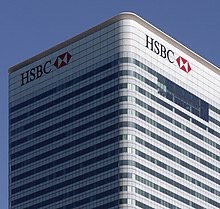
HSBC Holdings plc (Chinese: 滙豐), originally The Hongkong and Shanghai Banking Corporation, and known locally as HongkongBank in Hong Kong, Canada and Australia during the 1980s-90s, is a British universal bank and financial services group headquartered in London, England, with business links to East Asia and a multinational footprint. It is the largest Europe-based bank by total assets, ahead of BNP Paribas, with US$2.953 trillion as of December 2021.[6] In 2021, HSBC had $10.8 trillion in assets under custody (AUC) and $4.9 trillion in assets under administration (AUA).[4]
This is what Guy Pearse found out in 2012. [See Chapter 1 ‘Banks’ pp 5 – 54 ]
HSBC said it was ‘carbon neutral’ and had a Carbon Finance Strategy ‘to promote clean technologies and non-fossil-fuel energy solutions.’ It was putting $100 million over 4 years into 5 global programs. What’s that? Only $20 million over 4 years for one of them. That meant $5 million a year. Just look at its assets and ask where is it really investing?
In 2008 HSBC promoted a Green credit card in Hong Kong and with every use a small donation would go to environmental projects in Hong Kong. [p.6]
However, HSBC lends billions to large corporations. One is Rio Tinto that exploded the sacred site of the Juukan Gorge. HSBC has a 20% stake in Rio Tinto Ltd. Just take in this example. ‘In 2011, when HSBC was hosting the ‘Business Summit on Climate Leadership’, Rio Tinto was using HSBC money to buy new coal projects in Mozambique.’ [p. 7] Rio Tinto was also after coal sites in Mongolia and Namibia as well as its sites in Australia.
HSBC has financial stakes in Woodside – 17%. And Woodside’s Scarborough Project is a danger to pristine waters and marine life. ‘Scarborough will produce levels of pollution which are equivalent to 15 coal-fired power stations concentrated in one of the most culturally and environmentally important areas of WA’. From ‘Say No’ to Scarborough.
Checking in 2023, I found no mention of the environment or clean energy or climate change in what HSBC calls its ‘Community’ and ‘Diversity and Inclusion’ roles in Australia.
What did I find in the public domain?
In 2018 HSBC formed a partnership with iCapital Network focused on ‘alternative investments’. They cover private equity, real estate, vintage wine and art.
In 2023 HSBC is interested in ‘the programmability of digital currencies’.
‘Along with being able to represent monetary value and ownership, programmability of digital currencies could unlock new types of transactions. Of course, concerns exist around the potential misuse of programmability and the possibility it could reduce financial flexibility and privacy.’
Where is HSBC’s commitment to business leadership about climate change in all of this?
Please buy Green wash. This was a Christmas present to me for 2023.
Maybe find one second hand, or on-line, or borrow Guy Pearse’s book from a public library.
 Sciences and Humanities
THANK so very much Erica for all that you do to advocate for the health of our environment.
Happy New Year!
Love and hugs,
JoAnne
Visit JoAnneâs blog at https://poetrywithmathematics.blogspot.com/ https://poetrywithmathematics.blogspot.com .
LikeLike